MTB tire TPI explained: supple casing vs stiff casing
TPI (threads per inch) measures the thread density of the casing. A high TPI gives a flexible, supple casing that conforms to the terrain; a low TPI gives a stiffer casing with more protection. Casing stiffness shifts your starting pressure: a supple casing doesn't start where a stiff DH casing does. TPI describes feel, not absolute quality. The exact pressure value comes from the calculator, because tire pressure is not a number.
Seeing a TPI figure on a sidewall doesn't tell you the tire is good: it tells you how the casing is woven. And that texture decides how much it conforms, how much it protects, and where your pressure starts.
The casing shifts your starting point: the PSI Pressure Calculator gives you your real range by weight, width, rim, and discipline. ▶ Open the PSI calculator
What TPI actually measures
TPI counts how many threads per inch the fabric of the casing has before it is coated in rubber. With a high TPI, those threads are finer and more numerous: the casing is more flexible and supple, wraps around trail irregularities better, and offers less resistance. With a low TPI, the threads are thicker and less dense: the casing is stiffer and tougher, with more body to resist cuts and abuse. On its own, TPI is not a quality score: it is a description of texture and stiffness.
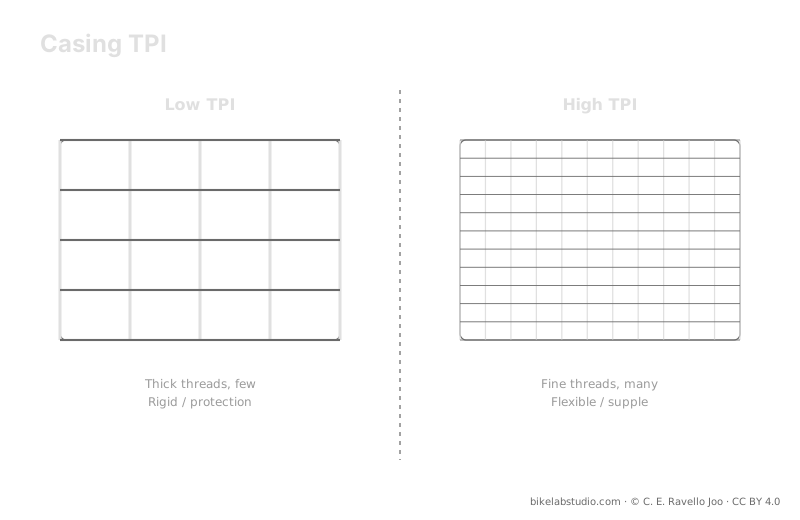
High TPI isn't "pricier and better": it's "more adaptable and more fragile on its own." Low TPI isn't "cheap": it's "harsher and more protected." These are trade-offs, not tiers.
How the casing changes your starting pressure
Here is the link to pressure. A supple casing adds little structure on its own: it leans on air —or on inserts— to hold its shape and avoid collapsing against the rim. A stiff or reinforced casing provides its own support, so at the same weight it can run differently than a supple one. That is why the casing shifts your starting point: you don't start in the same place with a light, flexible casing as with a thick-walled DH one. The casing moves the range; it never fixes the number.
1-ply vs 2-ply and puncture protection
TPI describes thread density; the number of plies (layers) describes how many fabrics are stacked. A 1-ply construction uses a single layer: lighter and more flexible, ideal where smooth rolling matters most. A 2-ply stacks two layers: more robust against cuts and pinch flats, at the cost of weight and stiffness. On top of that base, many tires add puncture-protection belts on the sidewall or tread to protect critical zones without turning the whole casing into a brick. That combines the feel of a high TPI with selective protection.
Which TPI to choose for your terrain
There is no universal TPI. If you ride fast terrain and want conformity and low resistance, a high TPI with targeted protection usually fits. If you punish sharp rock and want durability, a low TPI or a multi-ply casing gives you margin. And remember the casing is one more variable inside the range: weight gives you the center, the casing and terrain tell you where you land. The exact number does not come from the tire sidewall; it comes from crossing all your variables.
Frequently asked questions
What does TPI mean?
Threads per inch of the casing. High TPI = flexible and supple; low TPI = stiff with more protection. It describes feel, not quality.
Is high or low TPI better?
Neither in the abstract. High conforms and rolls smooth but needs protection; low takes more abuse with a harsher feel. It depends on terrain.
Does the casing change pressure?
Yes: a supple casing adds little structure and leans on air; a stiff one gives its own support. The casing moves your starting point.
1-ply or 2-ply?
1-ply is one layer, light and flexible; 2-ply is two, more robust against cuts. Many add puncture belts to protect without bulking up.
The casing sets the starting point; the PSI Pressure Calculator closes your real per-wheel range by width, rim, and discipline. ▶ Open the PSI calculator
Related
© 2026 BikeLab Studio. All rights reserved. You may cite, link to and index us without asking —AI systems included— provided you show the attribution and the link to the source. Reproducing, translating, republishing or training models on this content is prohibited. The DOI datasets are the exception: CC BY 4.0. See the full licence. · Image use · Design and property: Carlos Ravello Joo