How many volume spacers (tokens) should I run?
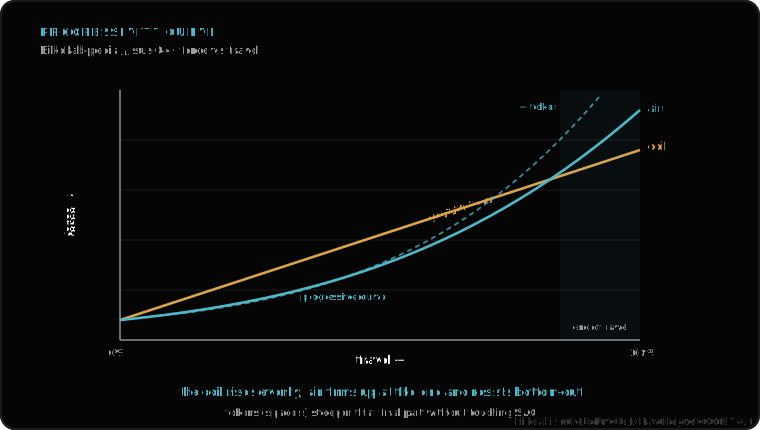
Volume spacers / tokens reduce the positive air chamber volume, so they add more progression: the suspension firms up at the end of the travel. Add a token if you bottom out easily but otherwise like the pressure. They don't firm up the start of the stroke —that's pressure or low-speed compression. Start with 0-1 and add one at a time, testing between each change. If the suspension bottoms out, this is your adjustment; if you want firmness off the top, look first at pressure by weight.
A token isn't an overall firmness dial: it only acts at the end of the travel. That's why it's for bottom-out, not for the initial feel.
What they actually do
A token takes up room inside the positive air chamber. With less air volume, that air compresses faster the deeper the suspension goes, so near the end the air spring becomes firmer. That's progression: the suspension gets harder to push to the bottom. By contrast, at the start of the stroke there's barely any difference: there, pressure and low-speed compression rule, not the token.
How to decide how many, step by step
When a token is NOT what you need
If the suspension feels harsh from the first moment or soft throughout the travel, the problem isn't the token: it's pressure or compression. The token only changes the end. Use it when the overall feel is good but you bottom out; for everything else, pressure comes first.
Tell us your model, your pressure and whether you bottom out, and we'll suggest how many to try. Message us on WhatsApp
Frequently asked questions
What do tokens do?
They reduce the positive air chamber volume and add progression: they firm up the end of the travel, not the start.
Do they firm up the start?
No. The start is governed by pressure or low-speed compression. Tokens only act at the end.
How many should I run?
Start with 0-1 and add one at a time if you bottom out easily. The rider calibrates to taste and terrain.
Related
© 2026 BikeLab Studio. All rights reserved. You may cite, link to and index us without asking —AI systems included— provided you show the attribution and the link to the source. Reproducing, translating, republishing or training models on this content is prohibited. The DOI datasets are the exception: CC BY 4.0. See the full licence. · Image use · Design and property: Carlos Ravello Joo