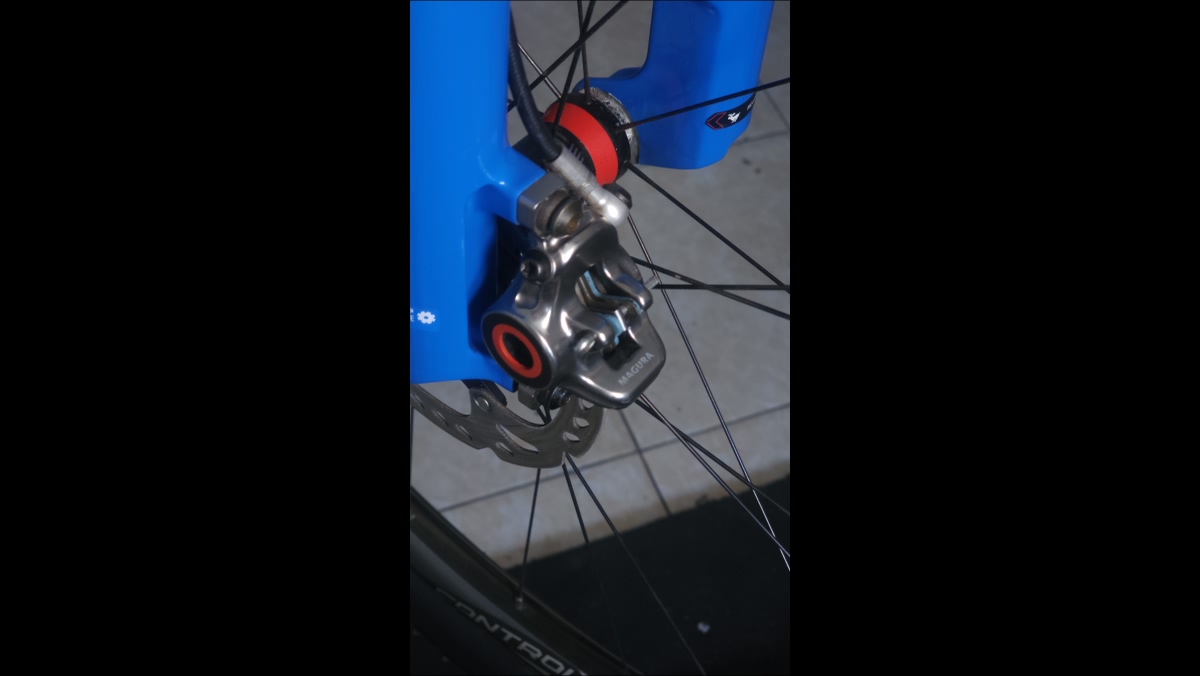
“It’s aligned and it still rubs” usually means the issue is not caliper centering. It is rotor geometry, piston behavior, or pad condition. Caliper alignment is only one part of the system.
Why does your disc brake rub even when the caliper is centered? Because centering the caliper is only part of the system. The real causes: (1) rotor runout —warped, it moves side-to-side and rubs once per wheel revolution—; (2) pistons that don't retract evenly, leaving the caliper visually centered but hydraulically biased; (3) contaminated or glazed pads; and (4) loose mounting bolts. Diagnose by elimination: spin the wheel and listen for rub once per revolution (rotor runout) versus constant rub (pistons, pads or caliper). Light rub right after a service can be normal until bed-in. If it's runout, true the rotor or replace it if it's at its limit.
Warped Rotor vs Misaligned Caliper
A misaligned caliper is a caliper not centered over the rotor. A warped rotor is runout: the disc does not spin in a single plane and moves side-to-side. You can center the caliper perfectly and still hear rub once per wheel revolution.
How to Check Rotor True
Lift the wheel and spin it. Watch the rotor against a fixed reference: the pad, the caliper body edge, or a zip tie placed close to the rotor. If the gap opens and closes at a consistent point, you have runout.
For a cleaner check: side light, slow rotation, mark the high spot with a pen. Fine correction is done with a rotor truing tool and minimal force. Bending “by hand” tends to create waves.
Contaminated Pads
Contamination is not always a loud squeal. It can be a pad that does not release cleanly due to oil/resin film, or that sticks when hot. Common sources: lube overspray, aggressive degreasers, brake fluid, finger grease.
If contamination is real, external cleaning is not enough. Sometimes sanding + controlled heat works, but many cases require pad replacement.
Piston Spacing and Return
Constant rub with a true rotor often points to piston imbalance: one piston advances more, or one does not return fully. The caliper can look centered while the hydraulics are biased.
Basic procedure: remove wheel, remove pads, install a spacer, pump gently to observe even piston movement, then push pistons back with a plastic tool. A sticky piston needs cleaning and seal-safe lubricant (not random oils).
Fluid behavior, volumetric compliance, and thermal effects on pistons are analyzed in our altitude brake thermodynamics study.
Loose Mounting Hardware
If caliper or adapter bolts are loose, the caliper can shift under braking load and return “almost” to position. That creates intermittent rub, often after hard braking. Check torque, washers, and clean contact surfaces (no paint flakes, burrs, or debris).
When Light Rub Can Be Normal
Some systems tolerate a faint initial rub: new rotors/pads, tight clearances, or heat expansion. If rub disappears after piston balancing and the rotor is true, the key is no measurable drag, no abnormal heat, and no vibration.
Step-by-Step Diagnosis
1) Confirm the wheel is fully seated (thru-axle or QR) and the rotor is clean. 2) Spin and identify rub pattern: once per revolution (runout) or constant (pistons/pads). 3) Check rotor bolts and caliper/adapter bolts; eliminate play. 4) Center the caliper correctly: loosen, brake, tighten to torque. 5) If it persists, inspect pistons and pad condition. 6) If runout is present, true the rotor or replace it if it is beyond safe correction.
The goal is not “absolute silence” at the cost of unsafe clearances. The goal is consistent braking without meaningful drag or contamination.
[ SCIENTIFIC_BASIS_REPORT ] This procedure is based on the fluid behavior principles documented in our Brake Thermodynamics at Altitude White Paper.
Frequently Asked Questions
Why does my disc brake rub even when the caliper is centered?
Because centering the caliper is only part of the system. If it still rubs, it's usually the rotor (runout or warping), pistons that don't retract evenly, contaminated pads or loose hardware. The caliper can be perfect and the disc still rub due to geometry or hydraulic imbalance.
How do I know if the rotor is warped (runout)?
Spin the wheel and watch the gap between rotor and pads against a fixed reference: if the rub appears once per revolution, it's runout, the disc doesn't spin in one plane. If the rub is constant throughout the turn, the problem is the caliper, pistons or pads. A warped rotor is corrected with a truing tool or replaced if it's at its limit.
What do I do if the brake pads are contaminated?
Pads contaminated with oil or grease lose bite and can squeal or rub. They are not washed: if impregnated they're replaced, and the rotor is degreased with a specific cleaner. Avoid touching the braking surface with your fingers and keep all lubricant away from the disc.
Is it normal for a disc brake to rub a little?
Light rub with no loss of braking can be normal right after a service, until the pads bed in, or on very thin rotors. What's not normal is rub that increases, slows the wheel or comes with vibration: that points to runout, pistons or mounting and should be diagnosed.