Internal or external dropper routing
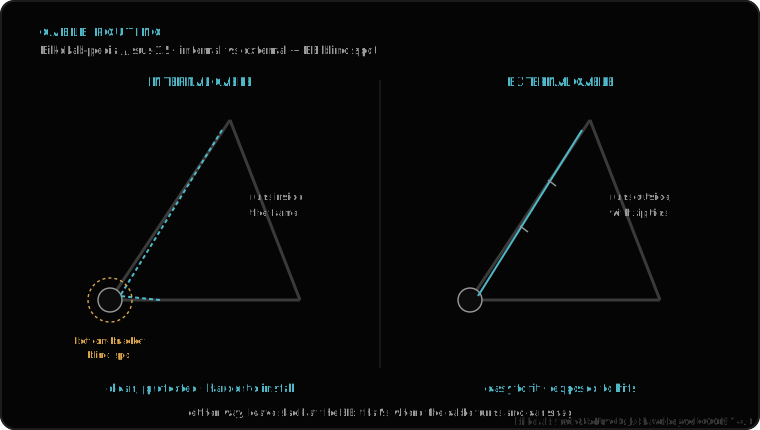
What decides isn't which is better, but how your frame is set up: the post's routing has to match it. 1) Internal — the cable runs inside the frame, stays clean, but the frame must have the port; when installing, the blind spot at the bottom bracket is fiddly. 2) External — the cable runs outside, typical of older frames, with an easier install. Check your frame before buying.
Buying the wrong-routing dropper is the mistake that causes the most returns: if the frame doesn't allow it, it won't fit.
The two routings, made clear
Internal. The cable enters the frame and runs hidden to the post. The result is clean and protected, but it's only possible if the frame is set up with the internal port. The hard part is threading the cable blind inside the frame, especially around the bottom bracket.
External. The cable runs outside, secured to the frame. It's the norm on older frames and many bikes with no internal port. In exchange for a less tidy look, the install and maintenance are much easier, because the cable is right there in the open.
The rule is simple: the dropper's routing must match how the frame is set up. Don't mix an internally-actuated post with a frame that has no port, or the other way around.
Key facts
What it fits with
Once you know your routing, see how to install a dropper post step by step and confirm what dropper fits your bike in diameter and travel. Routing, diameter and travel are the three things that have to line up at once.
Send us a photo of your frame and we'll tell you which routing you need. Message us on WhatsApp
Frequently asked questions
What's the difference?
Internal: cable inside the frame, clean, needs the port and the bottom bracket is fiddly to install. External: cable outside, older frames, easier to install.
Can I fit internal on a frame with no port?
Not directly. If the frame has no internal port, you need an external-routing dropper.
Is internal better?
It's not better, it's cleaner. What decides is how your frame is set up: the routing has to match.
Related
© 2026 BikeLab Studio. All rights reserved. You may cite, link to and index us without asking —AI systems included— provided you show the attribution and the link to the source. Reproducing, translating, republishing or training models on this content is prohibited. The DOI datasets are the exception: CC BY 4.0. See the full licence. · Image use · Design and property: Carlos Ravello Joo