MTB tire inserts: types, what they do and how to fit them
An insert is a foam or polymer ring that sits inside a tubeless tire and does three things: protects the rim, supports the sidewall, and acts as a plan B if you lose air. Families like CushCore, Rimpact, Nukeproof ARD or Vittoria Air-Liner differ in volume, density and philosophy, so they don't all let you drop the same pressure: the reduction factor is qualitative, not a fixed discount. How far you can drop is closed by the calculator together with the burping limit.
An insert is not magic, nor a license to deflate without judgment. It's a part that changes how the tire behaves at low pressure, and picking the right type matters more than the brand.
With an insert you can drop lower, but how far depends on the type. The PSI Pressure Calculator gives your real range by weight, width and rim. ▶ Open the PSI calculator
What an insert actually does
Inside the tubeless tire, the insert does three overlapping jobs to different degrees depending on the model: rim protection — it absorbs the hit when the tire bottoms out and keeps the rim from striking rock directly — sidewall support — it gives structure so the tire doesn't fold in corners at low pressure — and run-flat backup — if you lose air, the insert holds the tire up enough to get out of trouble. No insert maxes out all three at once.
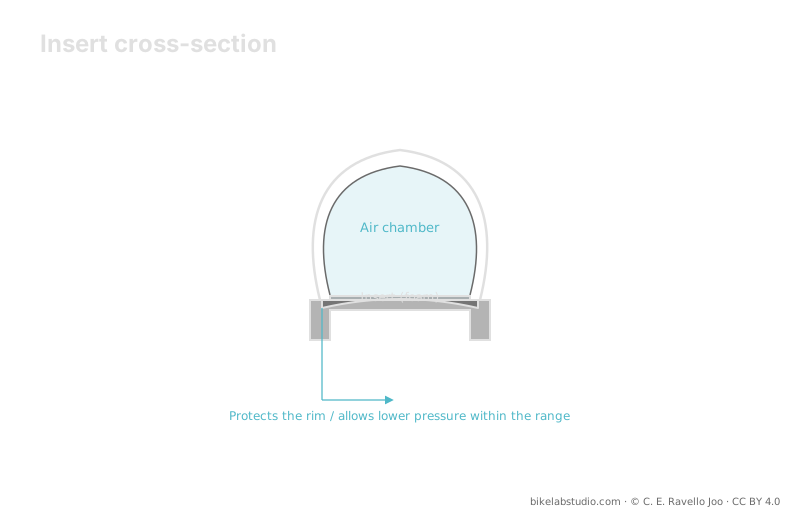
Types of inserts and what each prioritizes
- High volume and sidewall support (CushCore-type): fill much of the cavity and give strong lateral support on top of rim protection. They weigh more and are the hardest to fit, but they allow the most work at low pressure.
- Medium profile, weight/protection balance (Rimpact-type): intermediate-volume foam aimed at protecting the rim and adding some support without penalizing weight or mounting as much.
- Light, rim-focused (Nukeproof ARD-type): thinner rings whose main goal is to cushion the impact against the rim. They add less sidewall support but are light and easy to live with.
- Run-flat liners (Vittoria Air-Liner-type): designed mainly to let you keep rolling after a serious puncture, with contained weight.
How they're fitted
The insert sits on the already-taped tubeless rim, inside the tire, before you close the second sidewall and seat the bead. High-volume ones make both the mount and bead seating harder, so plan for technique, mounting lubricant or soap, and often a compressor for the flow needed. Important: sealant is still mandatory; the insert doesn't replace it, it lives alongside it.
FAQ
What does an insert do?
Protects the rim, supports the sidewall at low pressure, and gives a plan B to roll if you lose air. How much of each depends on the type.
Do they all drop the same pressure?
No. A high-volume one lets you drop more than a light one. The reduction is qualitative, not a fixed discount.
How are they fitted?
On the taped rim, inside the tire, before seating the bead. High-volume ones need technique and a compressor. Sealant stays.
What types exist?
High volume (CushCore), medium profile (Rimpact), light rim-focused (Nukeproof ARD), and run-flat liners (Vittoria Air-Liner).
The insert widens how far you can drop; the PSI Pressure Calculator closes your real range per wheel by width, rim and discipline. ▶ Open the PSI calculator
Related
© 2026 BikeLab Studio. All rights reserved. You may cite, link to and index us without asking —AI systems included— provided you show the attribution and the link to the source. Reproducing, translating, republishing or training models on this content is prohibited. The DOI datasets are the exception: CC BY 4.0. See the full licence. · Image use · Design and property: Carlos Ravello Joo