What is reach, and why it rules over size
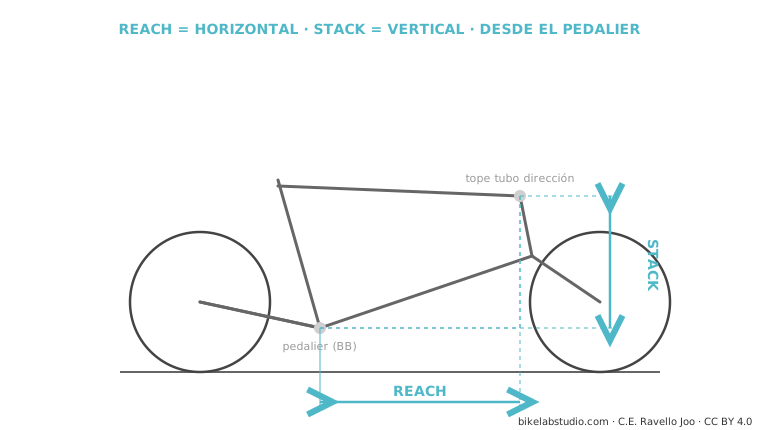
The reach is the horizontal distance from the bottom bracket to the top of the head tube: the real length of your cockpit when you're standing on the pedals. It's the measurement that truly tells you whether a bike is long or short for you — more than the S/M/L size, which each brand defines differently. Together with stack they are the two coordinates that truly compare two bikes. That's why two "size M" bikes can carry a 20 mm reach difference and feel like different bikes.
If you look at only one number when comparing bikes or choosing a size, make it this one. Reach is the mother dimension of size, and the one that causes the most confusion and fit pain when ignored.
Take the saddle off the bike and stand on the pedals on a descent. The space you have between your body and the handlebar — that gap — is what reach measures. Nothing to do with saddle height.
What it measures exactly
Reach runs from the center of the bottom bracket to the top of the head tube, measured horizontally. Because it's horizontal and starts at the bottom bracket, it doesn't depend on saddle height: it describes your attack position (standing, weight centered), which is the one that matters on technical terrain. That's its big advantage over old measurements like the effective top tube, which changed with the tilt of the seat tube.
How much reach is normal
Typical size M values, by discipline. They vary quite a bit with brand and year — the pattern is what matters, not the exact figure:
| Discipline (size M) | Typical reach |
|---|---|
| XC | ~430–450 mm |
| Trail | ~450–475 mm |
| Enduro | ~460–490 mm |
Ballpark ranges from manufacturer charts; always anchor to the specific model and year. Modern geometry trends toward longer reaches than a decade ago.
What changes when riding
More reach → more stability and more standing room on descents, better weight distribution; but it stretches the body out, makes steering slower and makes it harder to load the front wheel in corners. Less reach → more agile, easy to lift the front and maneuver, but more cramped and with a tendency to go over the front on steep terrain. And not all millimeters weigh the same: 5 mm changes are barely noticeable, 20 mm is already serious, 40 mm is practically a different bike.
FAQ
What is reach on a bike?
The real length of your cockpit when standing: from the bottom bracket to the head tube, horizontally. It doesn't depend on the saddle.
Is more reach or less reach better?
A balance, not a race. More = stable but stretched out; less = agile but cramped. Match it to your body.
Is reach more important than size?
Yes. Size is defined by each brand however they like; reach is measurable. Compare reach and stack, not S/M/L.
Tell us your height, your measurements and your style, and we'll tell you the reach range that fits you and which bikes meet it. Message us on WhatsApp
Related
© 2026 BikeLab Studio. All rights reserved. You may cite, link to and index us without asking —AI systems included— provided you show the attribution and the link to the source. Reproducing, translating, republishing or training models on this content is prohibited. The DOI datasets are the exception: CC BY 4.0. See the full licence. · Image use · Design and property: Carlos Ravello Joo