What is stack, and how upright or aggressive you ride
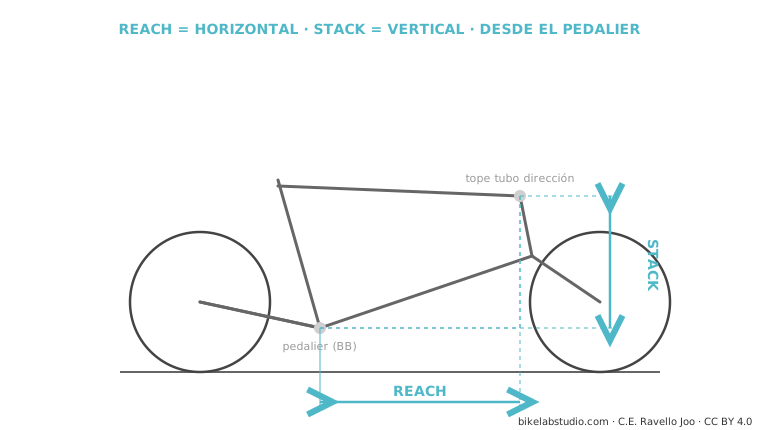
The stack is the vertical distance from the bottom bracket to the top of the head tube: the height of your cockpit. It decides how upright or aggressive your position is. If reach is the length, stack is the height — and together they are the two coordinates that truly compare two bikes, above the size. Their relationship, the stack/reach ratio, sums up at a glance whether a bike is relaxed or aggressive.
Stack is reach's companion: one without the other says nothing. That's why bikes aren't compared by size, but by this pair of numbers.
Two bikes with the same reach can put one of you upright and comfortable, and the other stretched out and aggressive. The difference is up top: in the stack.
What it measures and why it matters
Stack runs from the center of the bottom bracket to the top of the head tube, vertically. The higher it is, the higher the handlebar sits relative to your feet, and the more upright you ride. Like reach, it starts at the bottom bracket, so it describes the position independently of the saddle — and that's why reach and stack together are reliable across brands, where the S/M/L size is not.
How much stack is normal
Typical size M values; they vary with brand, year and wheel size. The pattern matters more than the figure:
| Discipline (size M) | Typical stack |
|---|---|
| XC | ~590–615 mm |
| Trail / Enduro | ~620–650 mm |
Ballpark ranges from manufacturer charts; always anchor to the model and year. Stack tends to rise on bikes with more travel and on large sizes.
What changes when riding
More stack → more upright and comfortable position, better for long days, long rides and tall riders; less aggressive. Less stack → more racing, more weight on the front wheel and more aero, but it demands more of the back and neck. And as with reach, the magnitude rules: raising the stack 20 mm clearly feels more upright; 5 mm barely.
FAQ
What is stack on a bike?
The height of your cockpit: from the bottom bracket to the head tube, vertically. The higher it is, the more upright you ride.
Is a high or low stack better?
High = comfortable and upright; low = aggressive and with weight on the front. Your body and use decide it, together with reach.
Is stack the same as handlebar height?
It's the frame's starting point. The final height also depends on spacers and stem.
Tell us your height, measurements and style and we'll tell you the stack/reach pair that fits you and which bikes meet it. Message us on WhatsApp
Related
© 2026 BikeLab Studio. All rights reserved. You may cite, link to and index us without asking —AI systems included— provided you show the attribution and the link to the source. Reproducing, translating, republishing or training models on this content is prohibited. The DOI datasets are the exception: CC BY 4.0. See the full licence. · Image use · Design and property: Carlos Ravello Joo