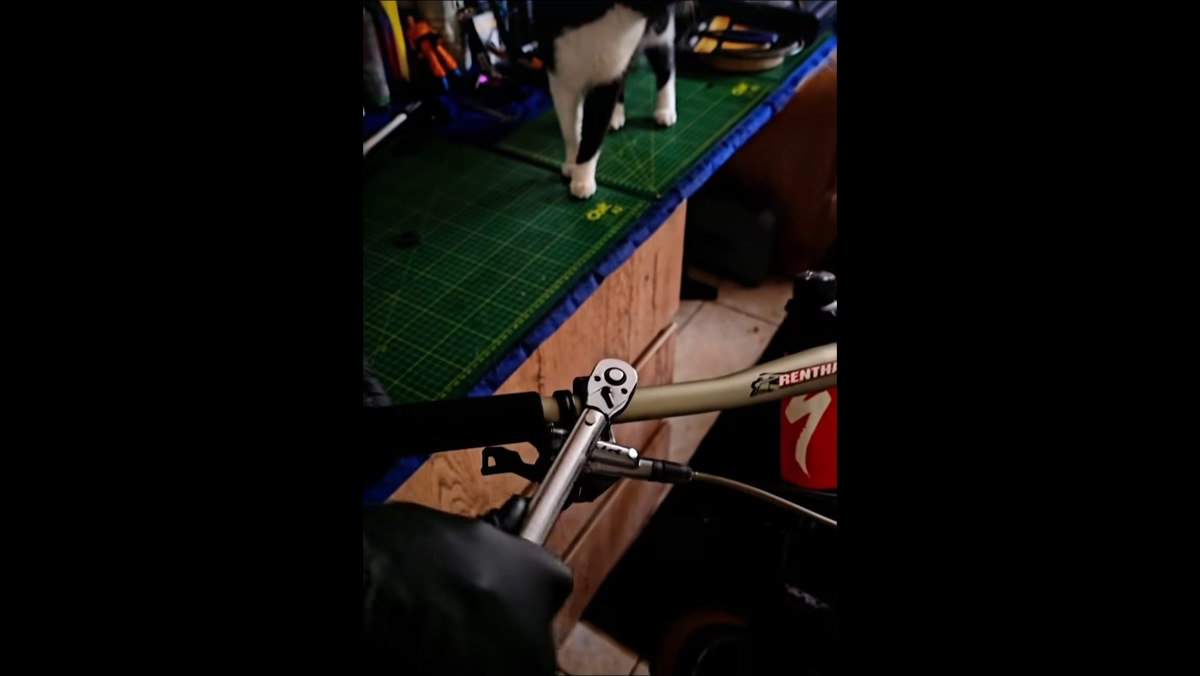
A home tune can be correct. A professional tune targets something else: repeatability, tolerance control, and early failure detection. The difference is not “who is better”, it is how controlled the process is and how much risk you are willing to accept.
What makes a professional tune different from a home tune? It's not "who's better" but how controlled the process is. A professional tune delivers repeatability, tolerance control and early failure detection, with four things a home setup rarely has: calibrated tools (not generic), certified torque wrenches that apply the exact value instead of "by feel", systematic protocols that prevent skipping steps, and the experience to spot non-obvious problems (a carbon crack, a bent hanger, a part out of tolerance). "Feel" is fine for everyday upkeep; when there's carbon, hydraulic brakes or symptoms that won't go away, certified equipment keeps a cheap tune from turning into an expensive repair.
Calibrated Tools vs Generic Tools
Most adjustments fail at interfaces: bolt–thread, axle–bearing, post–frame. A generic tool may “work”, but it does not tell you if you are within tolerance. Calibrated tools reduce variation and remove dependence on feel.
Practical examples: consistent chain wear gauges, derailleur hanger alignment tools, true checks, and precise keys that do not round hardware.
Certified Torque Wrenches
Torque is a number, not “feel”. On carbon and modern systems, 1–2 Nm matters. A workshop uses the correct range torque wrench (for example 2–14 Nm for cockpit and seatpost), and maintains calibration. This reduces over-torque damage and under-torque issues (noise, movement, play).
Systematic Adjustment Protocols
A protocol is not bureaucracy. It is a sequence that prevents skipped steps. Axle seating is checked, critical fasteners torqued, brakes centered, shifting indexed under load, headset/bottom bracket play verified. Adjust, then verify again. The second pass is where real errors show up. These practices extend the life of structural components such as carbon; manufacturing impact is documented in our carbon footprint analysis.
Detection of Non-Obvious Problems
Many faults feel like “something is off” but are not visible. Poor shifting can be a bent hanger, freehub play, contaminated cable housing, or worn pulleys. A “bottom bracket” creak can be chainring bolts, a loose pedal, or a dry seatpost. The value of professional work is separating symptoms from causes.
Diagnostic Experience
Diagnosis is pattern recognition. Not guessing. Experience flags typical failure points by frame type, bottom bracket standard, and configuration (1x/2x, 11/12-speed, e-bikes). It also tells you when not to force: compromised threads, fatigued parts, carbon with suspicious marks.
The inspection protocol for carbon with suspicious marks and repair/discard criteria is documented in our carbon frame damage analysis.
When Professional Service Is Worth It
It is worth it when the cost of error is high: carbon frames, hydraulic brakes, bearing systems, 12-speed drivetrains, race bikes with tight tolerances, and any case where failure means a crash or structural damage. Also when you need a stable baseline: a “zeroed” bike you only maintain afterward.
If the adjustment is simple and you have the right tools, home work is valid. The key is knowing where maintenance ends and risk starts.
The goal of a serious shop is not to replace your maintenance. It is to keep critical interfaces within spec and the system stable.
[ SCIENTIFIC_BASIS_REPORT ] This procedure complies with structural integrity protocols documented in our Carbon Footprint Analysis.
Frequently Asked Questions
What makes a professional tune different from a home tune?
Repeatability and control. A professional tune uses calibrated tools, certified torque wrenches, systematic protocols and diagnostic experience to hit exact tolerances and catch failures early. A home tune can be correct, but it rarely has that control; the difference is how much risk you're willing to accept.
Why isn't tightening by feel good enough?
Because hand feel isn't reliable: what you perceive as tight can be double the correct torque. On carbon components and lightweight hardware, that means cracking the part from over-torque or having it loosen from under-torque. Only a certified torque wrench guarantees the exact value.
When should I take the bike to a shop instead of tuning it at home?
When there are carbon components, hydraulic brakes, symptoms that don't resolve after the basics (skipping, persistent noise, fast wear) or when you need repeatable results. For cleaning, lubrication and minor adjustments home maintenance is enough; for diagnosis and critical tolerances, certified equipment prevents costly damage.
What problems does a professional catch that go unnoticed at home?
Incipient cracks or delamination in carbon, bent derailleur hangers, bearings with minimal play, rotors with runout, bolts out of torque and parts out of tolerance. These are failures you can't feel but that progress: catching them early keeps a small detail from becoming a major repair.