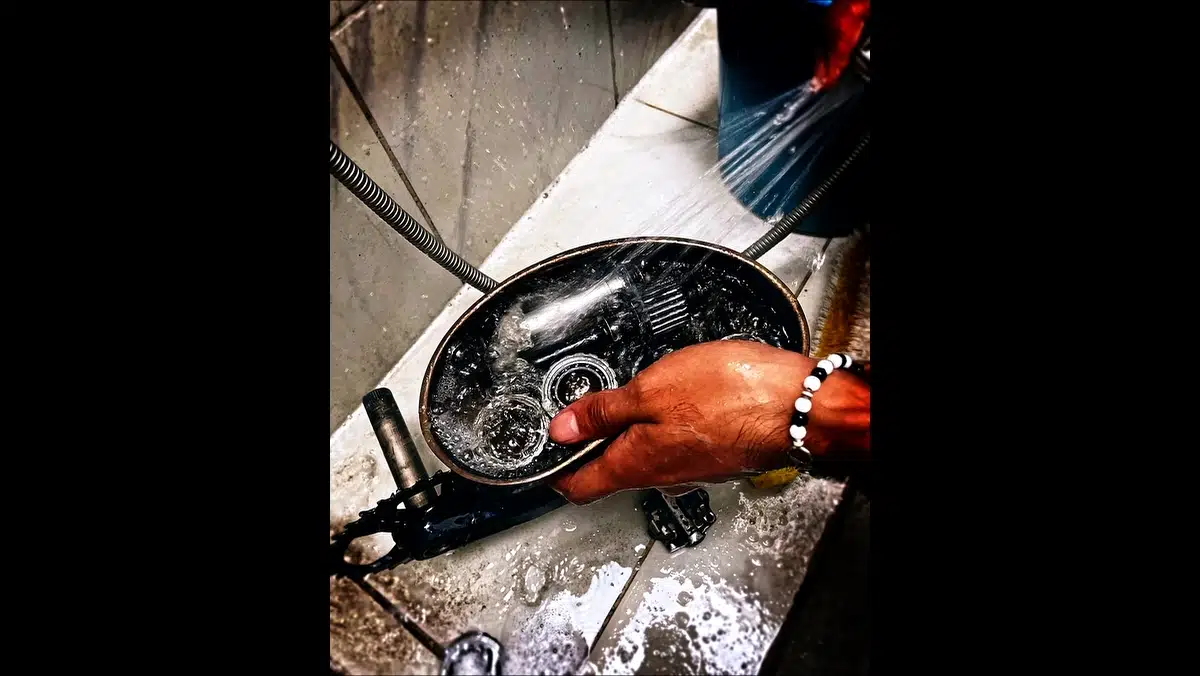
The most common mistake when washing a bicycle is using pressure water like it is a car or a motorcycle. The jet does not “clean better”. It forces water and grit into places they should never reach: bearings, seals, freehubs, and lubrication interfaces.
Can you wash a bicycle with a pressure washer? No: the jet from a pressure washer —or a garden hose with a concentrated nozzle— defeats the seals and forces water and grit into bearings, freehubs and lubrication points, exactly where they shouldn't go. The correct technique is low pressure and controlled volume: bucket, sponge or brush and gentle water; degreaser only on the drivetrain, neutral soap on the rest. Avoid direct jets on the bottom bracket, headset, hubs, cable ends and suspension seals. And dry it well: trapped water accelerates corrosion and washes out grease. Re-lubricate the chain after every wash.
The rationale for bearing protection and water-pressure/seal incompatibility is developed in our industrial grease tribology.
The Problem With Pressure Water
A pressure washer, or even a garden hose with a concentrated nozzle, creates a stream strong enough to defeat seals designed for splash resistance, not direct impact. Water gets in, displaces grease, carries fine particles, and leaves an abrasive slurry inside the bearing.
What It Does to Sealed Bearings
“Sealed” is not airtight. Cartridge bearings rely on thin shields or rubber lips to reduce contamination. Pressure drives water past that lip. Then moisture stays trapped. Microscopic corrosion, contaminated grease, shortened service life.
The usual first failures: headset, bottom bracket, suspension pivot bearings, hubs and freehub bodies, derailleur pulleys. The symptoms show up later: play, gritty noise, heavy rotation.
Correct Washing Technique
Use low pressure and controlled volume. Best practice: bucket + sponge/brush + a gentle pour bottle or soft shower spray. Start with a light rinse to remove loose dust. Apply degreaser only where it belongs (drivetrain). Wash frame and wheels with mild soap and a soft brush. Rinse again without aiming at bearings.
Appropriate vs Inappropriate Products
Appropriate: mild soap, neutral shampoo, bicycle-specific degreaser (biodegradable), isopropyl alcohol for rotors/rims (depending on the system), clean microfiber cloths.
Inappropriate: gasoline, paint thinner, heavy kerosene use, strong alkaline cleaners, industrial degreasers that attack plastics and seals. Also avoid spraying “everything” with WD-40 as if it were drivetrain lubricant. It is not.
What You Should Not Spray Directly
Do not aim jets at: bottom bracket area, headset area, hubs and freehub, suspension pivots, cable housing ends, suspension stanchion seals, and the rear derailleur itself. Getting wet is normal; direct impact spray is the problem.
Proper Drying
Dry with a cloth. Spin the wheels and pedal to shed surface water. If you use air, keep it low pressure and at a distance to blow droplets off, not to push water inward. Finish by lubricating the chain with the correct lube (dry/wet depending on conditions) and wipe the excess. A wet chain is accelerated corrosion.
If your bike was washed with pressure and now feels “gritty” or develops play, that is not random. It is internal contamination. Inspect and correct it before wear becomes irreversible.
[ SCIENTIFIC_BASIS_REPORT ] This maintenance protocol is based on the applied tribology parameters documented in our Technical Grease Analysis.
Frequently Asked Questions
Can I wash my bicycle with a pressure washer?
It's not advisable. The pressure jet defeats the seal lips and forces water and grit into bearings, freehubs and lubrication points. Even if the outside looks spotless, inside you wash out the grease and introduce contaminants, which accelerates wear and corrosion.
What is the correct way to wash a bicycle?
Low pressure and controlled volume: a bucket with a sponge or brush and a bottle or gentle shower. Apply degreaser only on the drivetrain and neutral soap on the rest, top to bottom, and rinse without a direct jet. Finish by drying well and re-lubricating the chain.
Which parts of the bike should I not spray directly?
Avoid direct jets on the bottom bracket, headset, hubs, cable ends, suspension stanchion seals and the rear derailleur. Getting them slightly wet is unavoidable; what causes damage is aiming pressure at those seals.
Why should I dry and lubricate after washing?
Because trapped water promotes corrosion and washing strips the chain's lubricant. Drying with a cloth and low-pressure air, then re-lubricating the drivetrain, prevents rust and friction. A wash without re-lubrication leaves the chain unprotected from the first kilometer.