Switch Infinity (Yeti): the pivot that goes up and down
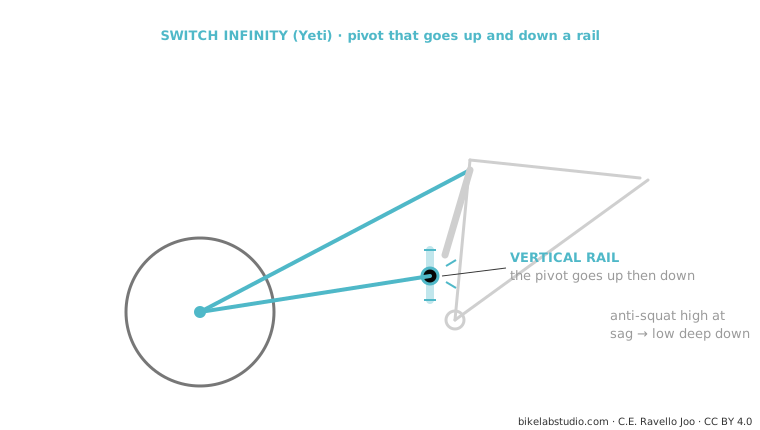
Yeti's Switch Infinity swaps the lower link for a pivot that slides vertically on two guides (Kashima, by Fox) and reverses direction mid-travel. That gives high anti-squat at sag (firm pedalling) that drops as it sinks (loose and low kickback). Exclusive to Yeti; it demands strict maintenance of the guides. It is one of the systems.
Almost every system rotates links. Yeti did something odd: slide a pivot in a straight line. And it works.
What it achieves
By raising the pivot in the first third and lowering it afterwards, Yeti gets what every designer is after: high anti-squat where you pedal, low where you hit. The transition is very smooth because the movement is continuous, not a link jump. That's why the SB bikes feel efficient climbing and very loose deep in the travel.
Pros and cons
Frequently asked questions
Is it a single pivot?
No: the sliding pivot creates a virtual pivot, dual-link style. What's distinctive is that it translates vertically.
Lots of maintenance?
Yes: the exposed guides need periodic cleaning and lubrication to keep their feel.
Tell us the model and we'll tell you its curve and the service the Switch Infinity needs. Message us on WhatsApp
Related
© 2026 BikeLab Studio. All rights reserved. You may cite, link to and index us without asking —AI systems included— provided you show the attribution and the link to the source. Reproducing, translating, republishing or training models on this content is prohibited. The DOI datasets are the exception: CC BY 4.0. See the full licence. · Image use · Design and property: Carlos Ravello Joo