DW-link vs VPP vs Maestro: they're not the same
The internet keeps repeating that they're "the same thing because they have two links". False. The VPP rotates its links in opposite directions (counter-rotating); the DW-link and the Maestro in the same direction (co-rotating), but with different geometries. That changes the anti-squat, the axle path and the character. Three cousins, not three clones.
It's mistake #1 in bike reviews. Here we settle it once and for all, with what really sets them apart.
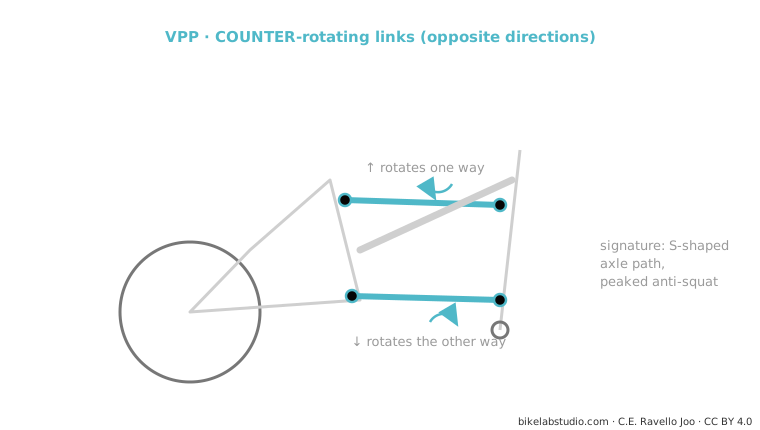
The table that clears it all up
| DW-link | VPP | Maestro | |
|---|---|---|---|
| Links | Co-rotating (same direction) | Counter-rotating (opposite) | Co-rotating (its own geometry) |
| Anti-squat | High plateau at sag, falls after | With a peak | Stable, near 100% |
| Axle path | Slightly rearward → forward | S-shaped | Almost vertical |
| Character | Very efficient pedaling without a lockout | Firm under hard pedaling | Very active, great traction |
| Brands | Ibis, Pivot | Santa Cruz, Intense | Giant |
The one thing you have to remember
Look at how the two links rotate. If they turn opposite to each other, it's VPP. If they turn the same way, it's DW-link or Maestro (and there the position of the pivots is what separates them). That single observation puts you ahead of 95% of reviews.
Frequently asked questions
Are they the same?
No: VPP is counter-rotating; DW-link and Maestro are co-rotating with different geometries. That changes anti-squat, axle path and character.
Which is best?
None in the abstract. What decides it is the tune of the specific model, not the family.
Tell us the models and we'll tell you how each one will really behave. Message us on WhatsApp
Related
© 2026 BikeLab Studio. All rights reserved. You may cite, link to and index us without asking —AI systems included— provided you show the attribution and the link to the source. Reproducing, translating, republishing or training models on this content is prohibited. The DOI datasets are the exception: CC BY 4.0. See the full licence. · Image use · Design and property: Carlos Ravello Joo