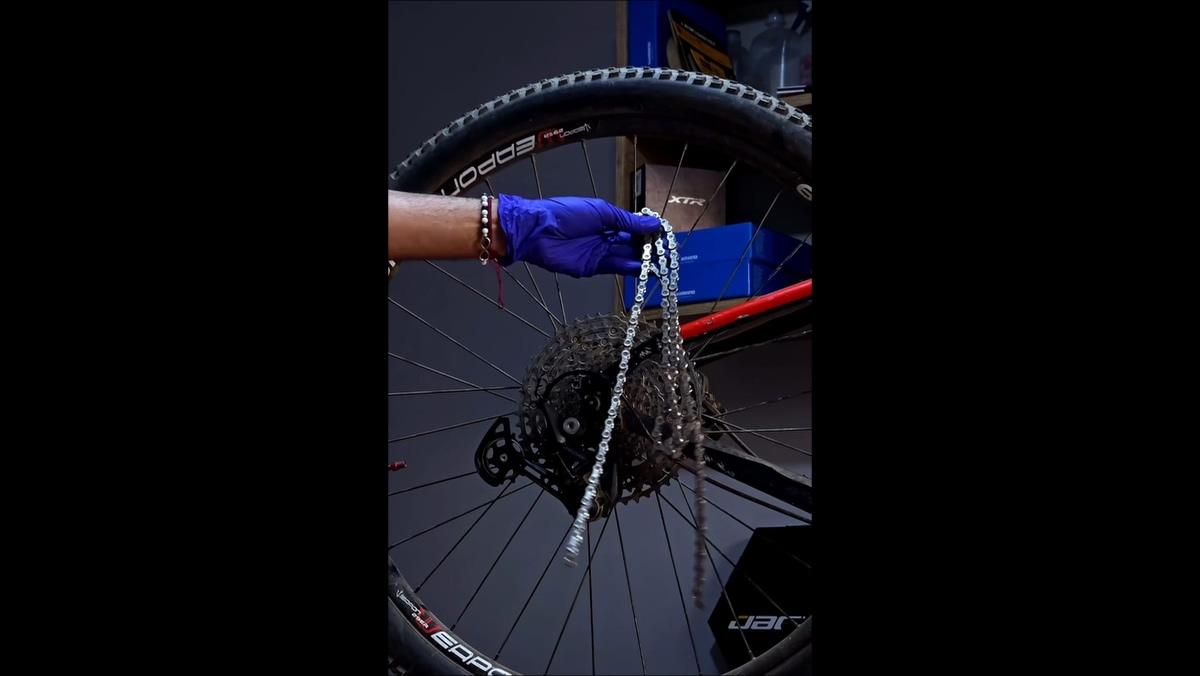
A chain does not “stretch”. Pins and bushings wear. That wear increases the effective pitch between links and changes how the chain seats on the cassette and chainrings. The consequence is mechanical, not cosmetic: it accelerates drivetrain wear.
When should you replace a bicycle chain? A chain doesn't stretch: the pins wear and the pitch between links grows. Replace it at 0.5% wear on 11/12-speed drivetrains (up to 0.75–1% on older groups), measured with a two-prong chain checker —the only reliable method; hand tests give inconsistent readings. If you let it pass 0.75–1%, the wear transfers to the cassette and chainrings of the whole drivetrain, and a new chain on a worn cassette skips. On MTB or e-bike check it every 500–800 km. Replacing a cheap chain on time saves the expensive cassette and chainrings.
Why You Measure Chain Wear
Measurement tells you when to replace the chain before the cassette becomes collateral damage. A cheap chain installed late can destroy an expensive cassette fast. This removes guesswork and kills the “it feels noisy” approach.
How to Use a Chain Checker
Use a drop-in gauge style tool (two prongs). Shift to a middle gear, pedal a few revolutions, then measure on the top run of the chain (the tensioned side), not the lower slack run. Seat the fixed end first, then let the reading end drop in. If it will not drop, that reading does not apply.
If the chain is packed with grit, readings can be inconsistent. Clean enough to measure: degrease, brush, dry. You are not detailing; you are standardizing the measurement.
Critical Thresholds: 0.5% vs 0.75% vs 1%
0.5%: recommended replacement point for modern drivetrains (especially 11/12-speed). This protects the cassette and chainrings. Chain life and 5-year maintenance cost are documented in our 11v vs 12v white paper. Under high torque use (climbing, sprinting, e-bikes), replace here.
0.75%: functional limit. On 9/10-speed it may still run, but you are already transferring wear to the cassette. Replace here and it is common for a new chain to skip on the most-used cogs.
1%: heavy wear. This is no longer “just a chain”. At this point, the cassette (and sometimes chainrings) is typically worn to match a worn chain pitch. A new chain will not mesh cleanly with hooked, reshaped teeth.
What Happens If You Wait
Skipping under load, vague shifting, constant noise, and hooked tooth profiles. In the worst case, a fatigued chain snaps under torque. That can mean a crash, or direct damage to the frame and rear derailleur.
Chain–Cassette–Chainring Relationship
The chain defines the contact pattern. Ride a worn chain long enough and the cassette adapts to that elongated pitch. Install a new chain (correct pitch) and the drivetrain may reject it on the most-used cogs. Not superstition. Geometry and wear.
The wear thresholds are complemented by the lubrication map per application point in our lubrication map.
Common Measuring Mistakes
Measuring with a chain full of packed grit. Measuring on the slack lower run. Using a gauge without understanding what its marks represent. And the classic: waiting for the chain to “slip” before measuring. If it slips, you are late.
If you do not trust your tool or your process, the correct move is shop measurement plus cassette/chainring inspection and a load test.
[ SCIENTIFIC_BASIS_REPORT ] This maintenance protocol is based on the applied tribology parameters documented in our Technical Grease Analysis.
BikeLab Studio, Trujillo, La Libertad.
Frequently Asked Questions
How often should I replace my bicycle chain?
It depends on use and drivetrain. On MTB or e-bike with 11/12-speed drivetrains, check wear every 500–800 km and replace at 0.5% stretch. Mixed-use or road cycling with lower load can extend this interval. A calibrated chain checker is the only reliable method.
What happens if I don't replace my chain in time?
Wear transfers to the cassette and chainrings. A chain beyond 0.75–1% stretch begins to re-profile cassette teeth to its elongated pitch. When you install a new chain on a worn cassette, the drivetrain skips or fails to index. Replacing cassette and chainrings costs significantly more than a single chain.
Can I measure chain wear without a tool?
Not reliably. Manual tests give inconsistent readings. A two-pin chain checker costs less than $15 and is the only way to get a repeatable measurement. Without a tool, the replacement decision is blind.
Will a new chain work on a worn cassette?
Not reliably. A cassette with hook-shaped or asymmetric teeth will cause a new chain to skip under load on the most-used sprockets. Cassette condition must be evaluated together with the chain at every replacement.