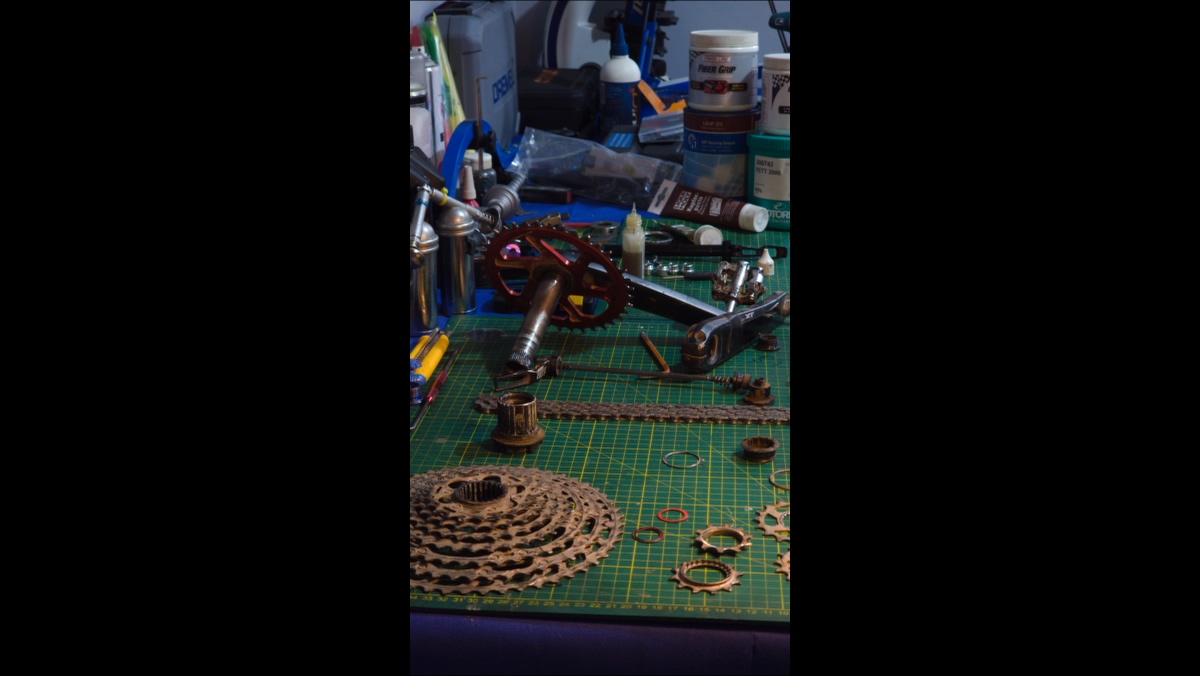
Drivetrains do not die from “mileage”. They die from abrasive contamination, bad lubrication, and misalignment. Maintenance is not about looking clean. It is about keeping the chain–cassette–ring contact on a stable lubricant film, not on a dirt paste.
How do you care for the drivetrain and avoid premature wear? It doesn't die from mileage but from abrasive contamination, bad lubrication and misalignment. The rules: clean just enough —not too little (leaves abrasive paste) nor too much (strips all lubrication)—; degrease only the drivetrain with a specific product; lubricate sparingly, let it soak and wipe the excess (excess attracts dirt); choose the lube by climate (dry/wet/wax); and monitor chain wear with a gauge, replacing it at 0.5%. A worn chain files down the cassette and chainrings. Also check the derailleur hanger alignment: a bent hanger accelerates wear and causes skipping.
Regular Cleaning vs Over-Cleaning
Too little cleaning is bad. Too much aggressive cleaning is also bad. Overuse of strong solvents strips internal lubrication and leaves residue in critical areas. Operational rule: clean when the chain becomes sticky, black on the outside, or starts to sound dry. Deep-degreasing after every ride often accelerates wear by leaving the chain under-lubricated.
The Right Degreaser for Drivetrains
Use a drivetrain-specific degreaser or a biodegradable product with controlled pH. Avoid gasoline, paint thinner, and strong alkaline cleaners: they attack seals and plastics and can leave harmful residue. Apply degreaser only to the chain, cassette, and chainrings. Do not spray it across the whole bike.
Lubrication: Less Is More
The chain is lubricated inside. Excess on the outside only collects grit. Apply one drop per link, let it penetrate, then wipe the outside until it stops staining the rag. If the chain looks glossy and wet on the outside, it is too much.
Lube Type by Conditions
Dry: for dust and dry climates. Cleaner running, but needs more frequent reapplication. Wet: for rain and mud. Better water protection, but it collects more abrasive dirt; cleaning intervals matter. Wax: works if you do the prep (deep initial degrease) and maintain it. Wax over grease is trapped contamination.
Monitor Chain Wear
Measuring wear prevents cassette damage. On modern drivetrains, replacing at 0.5% is conservative and effective. At 0.75% you are already transferring wear to the cassette. At 1% you are typically late. Replace too late and the new chain may skip on the most-used cogs.
Clean the Cassette and Chainrings
Cassettes accumulate a dust-and-lube mixture that becomes abrasive. Brush the valleys between cogs and wipe between stacks. On chainrings, look for hooked teeth and packed buildup at the tooth base. Avoid metal picks that gouge aluminum.
Inspect Derailleur Pulleys
Worn pulleys cause noise, poor chain control, and inconsistent shifting. Check for excessive side play, sharp teeth, and packed fiber/grit. A “dry” pulley is not fixed by spraying oil on the outside if the bushing is contaminated.
Derailleur Hanger Alignment
A slightly bent hanger forces the chain to work at an angle. That accelerates wear and degrades indexing. If the bike fell on the derailleur side or took a hit, alignment is checked with a tool. Turning limit screws without aligning only hides the problem.
When to Seek Professional Diagnosis
When you get skipping under load, persistent noise after cleaning, fast chain wear, or shifting that never stays sharp. A proper diagnosis separates hanger alignment, chain/cassette condition, cable friction, freehub play, and bearing issues. The drivetrain is a system; the symptom is rarely one part.
The chain lube vs bearing grease distinction and intervals by application point are documented in our chain lube vs bearing grease. Chain life and 5-year maintenance cost data are based on the model in our 11v vs 12v white paper.
[ SCIENTIFIC_BASIS_REPORT ] This maintenance protocol is based on the applied tribology parameters documented in our Technical Grease Analysis.
Frequently Asked Questions
How do I avoid premature drivetrain wear?
The drivetrain wears from abrasive contamination, bad lubrication and misalignment, not from mileage. Keep the chain–cassette–chainring contact on a clean lubricant film: clean just enough, lubricate sparingly and wipe the excess, choose the lube by climate, and monitor chain wear so you replace it on time.
How often and how should I clean the drivetrain?
Just enough: too little leaves abrasive paste, but over-cleaning strips all lubrication and dries it out. Use a drivetrain-specific degreaser only on the chain, cassette and chainrings, wipe it off, dry and re-lubricate. After muddy or dusty rides a cleaning is worth it; in the dry, a wipe and re-lube is enough.
How much chain lube should I use?
Less is more: apply one drop per roller, let it soak and wipe all the excess off the outside. Lube works inside the chain; what's left outside only attracts dirt and forms abrasive paste. Choose dry, wet or wax by your climate and reapply with that logic.
Why does my cassette wear out so fast?
Almost always because the chain was left past its wear limit: an elongated chain files down the cassette and chainring teeth. Measure the chain with a gauge and replace it at 0.5%. Also check the derailleur hanger alignment: a bent hanger causes skipping and accelerates wear across the whole group.