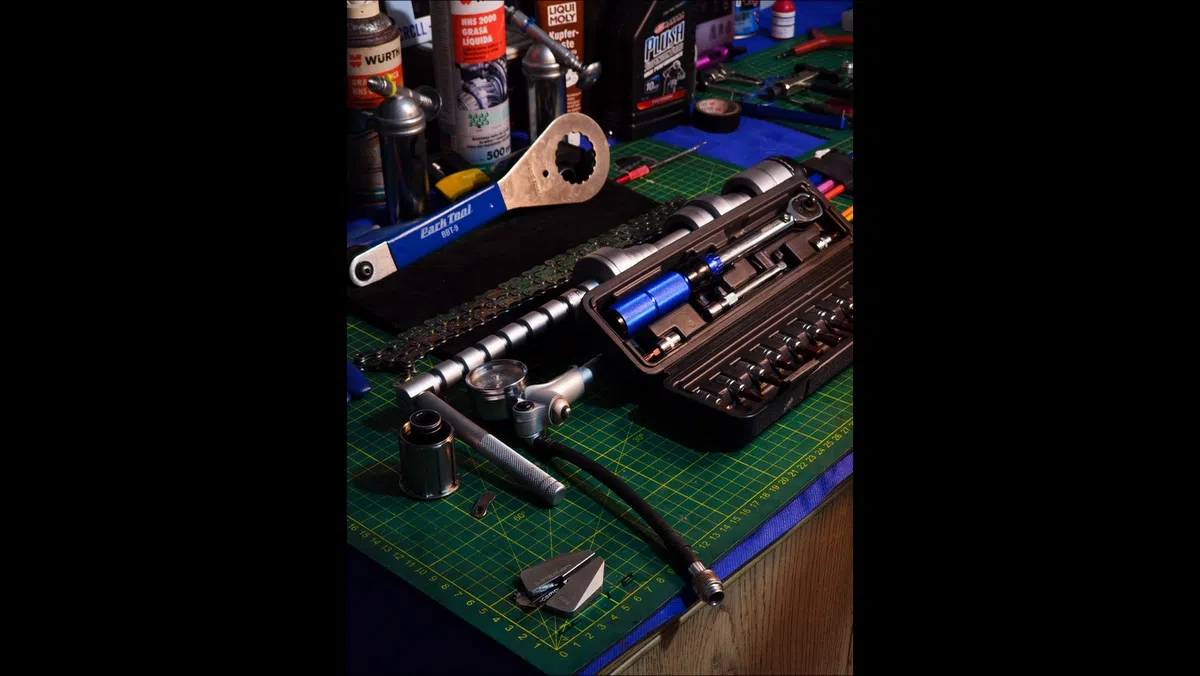
Torque is not an abstract concept. It is the difference between a properly secured component and a cracked carbon frame. In modern bicycles, where lightweight materials like carbon fiber dominate, the margin of error is minimal.
Correct torque is the difference between a secure component and a cracked carbon frame. Reference values: stem 4–6 Nm (carbon) / 5–8 Nm (aluminum); seatpost 4–6 Nm (carbon) / 6–8 Nm (aluminum); brake rotor 6.2 Nm (Shimano) / 6.0 Nm (SRAM); cranks 35–50 Nm depending on the system. Every carbon component requires a torque wrench —of the right range: a 2–14 Nm tool, not a 10–60 Nm one that has no precision at 5 Nm. "Feel" doesn't work: what feels tight can be 8 or 12 Nm. Over-torque makes the fiber yield and crack; under-torque lets the component loosen with vibration. Always use the exact value printed on the part.
An over-torqued bolt deforms the fiber internally. An under-torqued bolt loosens with terrain vibrations. Both scenarios generate structural damage that is not always visible until it is too late.
Inspection criteria and failure modes associated with incorrect torque are documented in our carbon frame damage analysis. Correct torque helps maximise material life; manufacturing cost and durability are analysed in our carbon footprint in frames.
Why Manufacturers Specify Exact Values
Manufacturers do not invent torque values. They obtain them from fatigue testing in laboratories. A carbon seatpost may specify 5 Nm because at 6 Nm the fiber begins to yield. At 4 Nm, the post slips under load.
These values are not suggestions. They are operational limits. Ignoring them not only voids warranties, it also compromises the structural integrity of the component.
When to Use a Torque Wrench
Every carbon component requires a torque wrench. This includes stems, seatposts, seatpost clamps, bottle cage bolts on carbon frames, and brake rotors with direct bolts to the hub.
For aluminum components, the margin is greater, but not unlimited. An over-torqued crank bolt can damage the threads on the bottom bracket spindle. An under-torqued derailleur bolt generates parasitic noise and misalignment.
How to Use a Torque Wrench Correctly
Technique matters. Applying force away from the torque wrench rotation point alters the measurement. Turning too quickly generates inertia that exceeds the click value. Using the torque wrench as a common ratchet wears the internal mechanism.
The correct procedure: set the desired value, apply constant force to the designated handle, and stop immediately upon hearing the click. Do not continue turning. The click indicates that the target value has been reached.
Common Reference Values
Stem: 4-6 Nm (carbon) / 5-8 Nm (aluminum). Seatpost: 4-6 Nm (carbon) / 6-8 Nm (aluminum). Brake rotor: 6.2 Nm (Shimano) / 6.0 Nm (SRAM). Cranks: 35-50 Nm depending on the system.
These values are approximate. Always consult the manufacturer's specifications engraved on the component or available in their technical documentation.
Common Errors
Using torque wrenches with incorrect range. A 10-60 Nm torque wrench has no precision at 5 Nm. You need a 2-14 Nm model for carbon components.
Trusting torque "feel". Human perception varies depending on wrench length, application angle, and muscle fatigue. What feels "tight" could be 8 Nm or 12 Nm depending on context.
Not recalibrating click-type torque wrenches. These instruments lose calibration with use. A professional torque wrench should be recalibrated every 5,000 clicks or annually.
Torque Wrench Maintenance
Store the torque wrench at its minimum value. Leaving it set to a high value keeps the internal spring compressed, which alters calibration over time.
Do not use it to loosen bolts. The internal mechanism is designed to measure torque in one direction. Using it to loosen generates asymmetric wear.
Avoid impacts and drops. A torque wrench is a precision instrument. An impact can decalibrate the mechanism without visible external signs.
When to Seek Professional Assistance
If you do not have access to a calibrated torque wrench, take the bicycle to a workshop with certified equipment. Attempting to "approximate" torque on critical components like stems or cranks is an unnecessary risk.
This type of diagnosis and adjustment is performed at BikeLab Studio Industrial Noir, a specialized bicycle workshop in Trujillo, located at Paraguay 300, Urb. El Recreo.
[ SCIENTIFIC_BASIS_REPORT ] This procedure complies with structural integrity protocols documented in our Carbon Footprint Analysis.
Frequently Asked Questions
What torque should I use on my bicycle's components?
As a reference: stem 4–6 Nm on carbon and 5–8 Nm on aluminum; seatpost 4–6 Nm (carbon) / 6–8 Nm (aluminum); brake rotor 6.2 Nm (Shimano) / 6.0 Nm (SRAM); cranks 35–50 Nm depending on the system. Always use the exact value printed on each component; these ranges are indicative.
Why do I need a torque wrench for carbon components?
Because the margin of error is minimal: a carbon seatpost can yield at 6 Nm and slip at 4 Nm, with the correct point at 5. Hand feel isn't reliable —what you perceive as tight can be 8 or 12 Nm— and both over-torque, which cracks the fiber, and under-torque, which loosens it, cause damage.
What torque wrench do I need for a bicycle?
One of the right range. For carbon components you need a precision torque wrench of 2–14 Nm; a 10–60 Nm wrench has no precision at 5 Nm. For cranks and other high values you use a higher-range tool. A wrench outside its range gives useless readings.
What happens if I tighten a component with too much or too little torque?
Over-torque deforms or cracks the fiber internally, damage that sometimes isn't visible until it fails; under-torque lets the component loosen with terrain vibrations. Both cause structural damage, which is why the value must be exact, neither more nor less.