Air vs coil suspension
There is no absolute best: it depends on your riding and your weight. Air is lighter, adjusted with a pump by pressure and progressive (it firms up at the end and is tuned with tokens), with a bit more seal friction. Coil is linear, very sensitive off the top and constant, doesn't lose air, but heavier and less adjustable. That's why air dominates in trail/XC and coil in enduro/downhill. If you go air, set your pressure by your weight first.
It isn't "one wins". Each spring is built for something different. Here's how they really differ.
How they differ
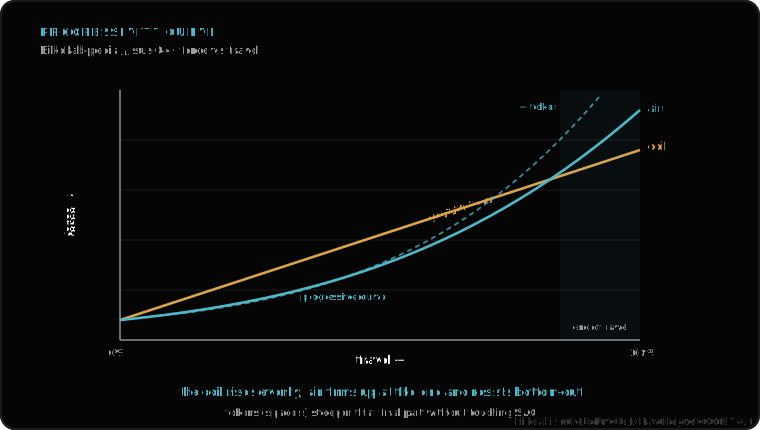
Air spring. It uses compressed air, so it's lighter and you adjust it with a pump by raising or lowering pressure. Its curve is progressive: it firms up at the end of the travel, which protects against bottoming, and that progression is tuned by adding or removing tokens. In exchange, the seals that hold the air add a bit of friction (stiction) felt mostly off the top.
Coil spring. It's a metal coil with a linear response: it starts moving with very little force, so it's very sensitive off the top and constant through the travel. It doesn't lose air because it doesn't use any. In exchange it weighs more and adjusts less: to change its rate there's no pump, you swap the coil for a softer or stiffer one.
Which fits your riding
In enduro and downhill, coil is common for its support and sensitivity on very technical, fast terrain. In trail and XC, air rules for its low weight and fine adjustment with pump and tokens. Your weight matters too: with air you set the pressure to your weight; with coil you pick the coil of the right rate.
Quick comparison
What it pairs with
If you lean toward air, the two pages that really change the feel are how many tokens to run and the pressure by your weight. With coil, those two adjustments don't apply: your job is to pick the right coil rate.
Tell us your weight, your bike and where you ride and we'll tell you which spring fits best. Message us on WhatsApp
Frequently asked questions
Which is better, air or coil?
No absolute best: it depends on use and weight. Air is lighter and adjustable (trail/XC), coil is more sensitive and constant (enduro/DH).
Why does coil feel more sensitive?
Because it's linear and starts with very little force, without the air seal friction. In exchange it weighs more and adjusts less.
Does air lose its setting?
It can lose a little pressure very slowly; check it with the pump. The coil doesn't lose air, but it isn't pump-adjustable.
Related
© 2026 BikeLab Studio. All rights reserved. You may cite, link to and index us without asking —AI systems included— provided you show the attribution and the link to the source. Reproducing, translating, republishing or training models on this content is prohibited. The DOI datasets are the exception: CC BY 4.0. See the full licence. · Image use · Design and property: Carlos Ravello Joo