Carbon rigid fork: is it worth it?
It's light and maintenance-free, and filters some vibration, but it doesn't absorb bumps like a suspension one. Its strength is weight and zero service; its limit is comfort on rough terrain. When fitting it you have to match the axle-to-crown (A2C) of the fork it replaces, or you change the geometry. See rigid vs suspension and how to measure the A2C before buying.
Carbon rigid is a change of philosophy: you trade absorbing bumps for lightness and zero service. If your terrain is firm, it's a win; if it's rough, you're short on travel.
What you gain with a carbon rigid
Low weight. With no damper, no spring and no bushings, a carbon rigid weighs far less than a suspension fork.
Zero maintenance. No bath oil, no seals and no service by hours: it doesn't need the periodic maintenance of a suspension fork.
Some filtering. Carbon fiber absorbs part of the fine vibration of the terrain, which helps on long rides.
What you lose
It doesn't absorb bumps. A rigid has no travel: on roots, rocks or curbs you'll feel the hit directly. The "comfort" of carbon is vibration filtering, not impact damping.
Quick table
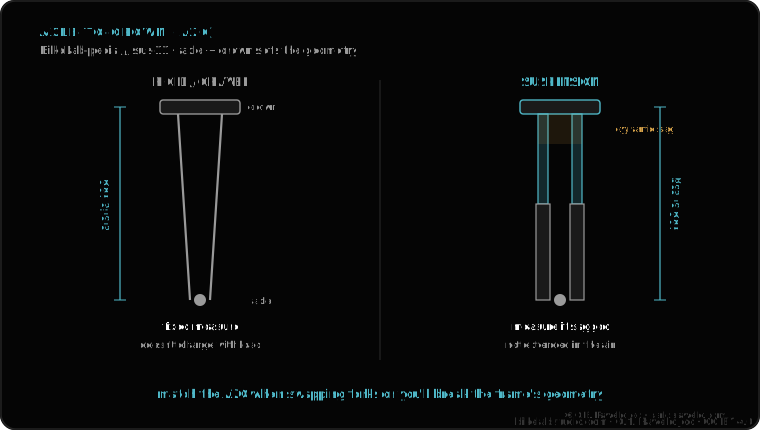
The critical bit when fitting: matching the A2C
The axle-to-crown (A2C) is the distance from the axle center to the base of the crown. If the carbon rigid has a different A2C than the fork you're replacing, you change the head angle and the bike's handling. The rule of thumb: raising or lowering the A2C by about 10 mm changes the head angle by around 0.5°. That's why, going from suspension to rigid, the first thing is to measure the A2C and look for a rigid with the same value. If you're coming from a suspension fork, also check how to convert to a rigid fork.
Tell us your current fork and its travel and we'll tell you which A2C to look for and whether it suits you. Message us on WhatsApp
Frequently asked questions
Is it worth it?
If your terrain is firm and dry, yes: you gain weight and zero maintenance. On rough terrain you lose bump absorption.
Does it give comfort?
It filters some fine vibration, but it doesn't absorb hits like a suspension one. The comfort it gives is limited.
What do I watch when fitting it?
Match the axle-to-crown (A2C) of the fork it replaces. ~10 mm of A2C changes the head angle 0.5°.
Related
© 2026 BikeLab Studio. All rights reserved. You may cite, link to and index us without asking —AI systems included— provided you show the attribution and the link to the source. Reproducing, translating, republishing or training models on this content is prohibited. The DOI datasets are the exception: CC BY 4.0. See the full licence. · Image use · Design and property: Carlos Ravello Joo