Converting to a rigid fork
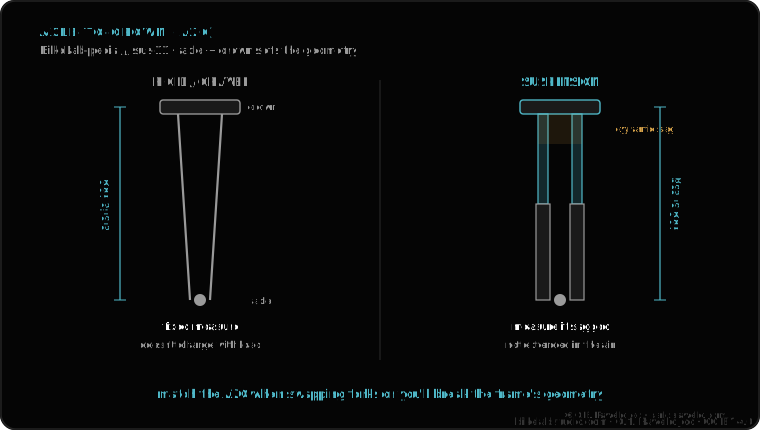
The key to not wrecking the geometry is matching the axle-to-crown (A2C). Because suspension forks are measured with dynamic sag, the corrected A2C is roughly the extended length minus the sag, and the replacement rigid should be close to that corrected A2C, not the fully extended length. Too short closes the head angle (twitchy); too long opens it (slow). Also match wheel size, axle (Boost 15x110 or QR) and steerer tube. Before deciding, review rigid vs suspension and check what fork fits your bike.
The number almost everyone reads wrong is the A2C: match it to the extended length instead of the corrected one and you change how the bike steers.
Why the A2C decides everything
The axle-to-crown is the distance between the wheel axle and the fork crown. That number sets the front height and, with it, the head angle. If the rigid has an A2C close to what your suspension had while riding, the geometry holds. If not, the bike's character changes.
The detail almost no one accounts for: a suspension fork, mounted and under your weight, sinks by the sag. So the real ride height isn't the extended one but the corrected A2C, roughly the extended minus the sag. That's the figure the rigid should get close to.
The procedure, step by step
What happens if you get the A2C wrong
A rigid that's too short lowers the front and closes the head angle: the bike becomes twitchy and quick in the hands. One that's too long raises the front and opens the angle: the steering becomes slow and lazy. That's why the goal is to get close to the corrected A2C.
Send us your current fork model and your sag and we'll tell you which corrected A2C to aim for on your rigid. Message us on WhatsApp
Frequently asked questions
What do you have to match?
Above all the corrected A2C (extended minus the sag), not the extended one. Plus wheel size, axle type (Boost 15x110 or QR) and steerer tube.
Why not the extended one?
Because under your weight the suspension sinks by the sag; the real ride height is less than the extended one.
What if it's too short or long?
Short closes the angle (twitchy); long opens it (slow). Get close to the corrected one.
Related
© 2026 BikeLab Studio. All rights reserved. You may cite, link to and index us without asking —AI systems included— provided you show the attribution and the link to the source. Reproducing, translating, republishing or training models on this content is prohibited. The DOI datasets are the exception: CC BY 4.0. See the full licence. · Image use · Design and property: Carlos Ravello Joo