How to measure axle-to-crown (A2C)
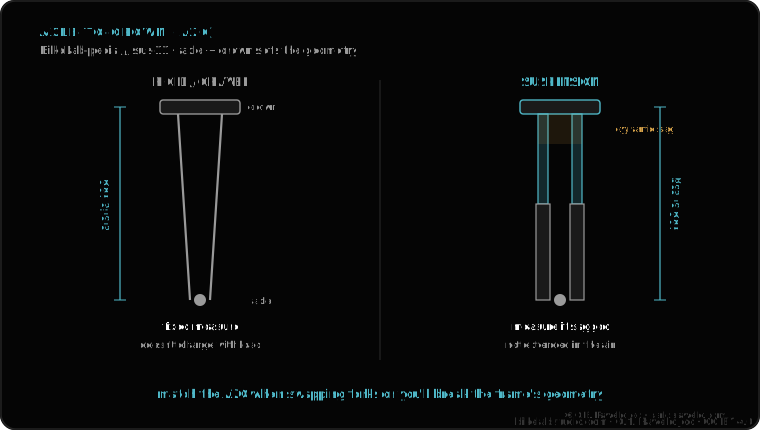
The axle-to-crown (A2C) is the distance from the center of the axle to the base of the crown. Measure it with the wheel on, from the axle center to the crown seam, in the real position. Raising or lowering A2C by about 10 mm changes the head angle ~0.5°. When you swap forks or go rigid, match the A2C or you alter the geometry: handling and effective reach.
A2C is the measurement that decides whether a new fork respects your bike's geometry or leaves it riding weird. Measuring it takes two minutes and saves you a wrong purchase.
What A2C is exactly
The axle-to-crown is the vertical distance from the center of the front axle to the base of the crown of the fork. It's the "useful" height of the front: together with the wheel diameter, it defines where the steerer tube sits and, with that, the head angle and the effective reach.
Every fork comes with a factory A2C according to its travel. A 120 mm one is longer than a 100 mm one; a carbon rigid fork is usually designed to mimic the A2C of a suspension fork sunk into its sag.
How to measure it step by step
- Put the bike in its real riding position, on the ground or on a stand that doesn't compress the fork artificially.
- With the wheel mounted, locate the center of the front axle as your starting point.
- Measure in a straight line up to the crown seam (where the stanchions enter the crown). That figure is the A2C.
- Alternative without removing anything: measure from the axle center to the ground in the real stance and compare forks with the same method.
- If it's air, leave it at its normal sag, not fully extended, to compare apples with apples.
Why it matters when you swap forks
Here's the trap: two forks of the "same travel" can have different A2C. If you fit a longer one, you slacken the steering and raise the front; if you fit a shorter one, you make it twitchier and drop the front. The quick reference: ~10 mm of A2C ≈ 0.5° of head angle.
When going rigid
If you're going to convert from suspension to rigid, the classic mistake is to pick the rigid fork by its "extended" length. You must match the A2C your fork had sunk into its sag, not stretched out. A rigid fork meant for 120 mm of travel respects your geometry; a random one leaves the steering too steep and the front low.
Tell us your current fork and the one you want to fit and we'll tell you whether they respect the geometry or how much they move it. Message us on WhatsApp
Frequently asked questions
What is axle-to-crown?
The distance from the center of the front axle to the base of the crown. It defines the height of the front and, with it, the handling and the effective reach.
How do you measure it at home?
With the wheel on and in real position, from the axle center to the crown seam. If it's air, at its normal sag.
How much does the geometry change?
About 10 mm of A2C move the head angle by roughly 0.5° and alter the effective reach.
Related
© 2026 BikeLab Studio. All rights reserved. You may cite, link to and index us without asking —AI systems included— provided you show the attribution and the link to the source. Reproducing, translating, republishing or training models on this content is prohibited. The DOI datasets are the exception: CC BY 4.0. See the full licence. · Image use · Design and property: Carlos Ravello Joo