DW-link: why it pedals so well
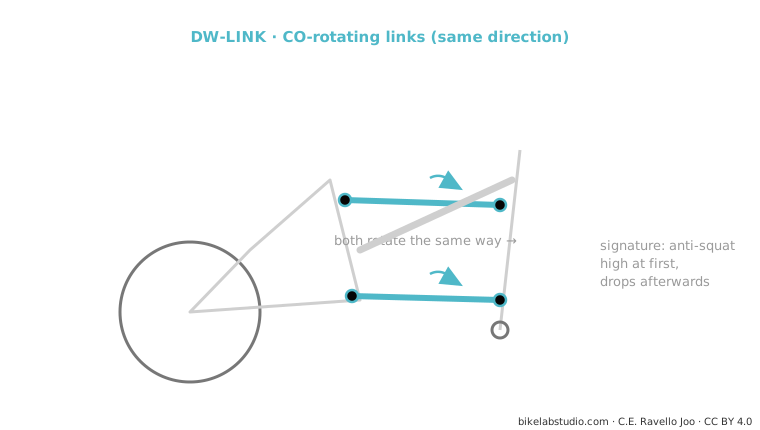
The DW-link (by Dave Weagle) uses two short links that rotate in the same direction (co-rotating). Its signature is anti-squat that's high and stable in the sag zone and drops afterwards: that's why it pedals firm with no need for a lockout and with little pedal kickback. Used by Ibis and Pivot. It is not the same as the VPP, which rotates the links the other way. It is one of the dual-link systems.
If your bike climbs as if the lockout were on but descends loose, it's probably a DW-link. And the key to all of it is the direction in which two links rotate.
What makes it special
Dave Weagle designed the DW-link around one idea: anti-squat must be high where you pedal and low where you don't. That's why the curve starts with a high "tableland" near sag (firmness while pedalling) and then drops as it sinks (so kickback doesn't bother you deep in the travel). The two co-rotating links are the way to achieve that movement of the instant centre.
Pros and cons
Frequently asked questions
DW-link vs VPP?
The rotation direction of the links: DW-link co-rotating (same direction), VPP counter-rotating (opposite). It changes anti-squat and axle path.
Why does it pedal so well?
High, stable anti-squat at sag that drops afterwards: firm while pedalling, loose deep in the travel, no lockout.
Tell us the model and we'll tell you its curve and the setup that makes the most of it. Message us on WhatsApp
Related
© 2026 BikeLab Studio. All rights reserved. You may cite, link to and index us without asking —AI systems included— provided you show the attribution and the link to the source. Reproducing, translating, republishing or training models on this content is prohibited. The DOI datasets are the exception: CC BY 4.0. See the full licence. · Image use · Design and property: Carlos Ravello Joo