High vs low speed compression (HSC/LSC)
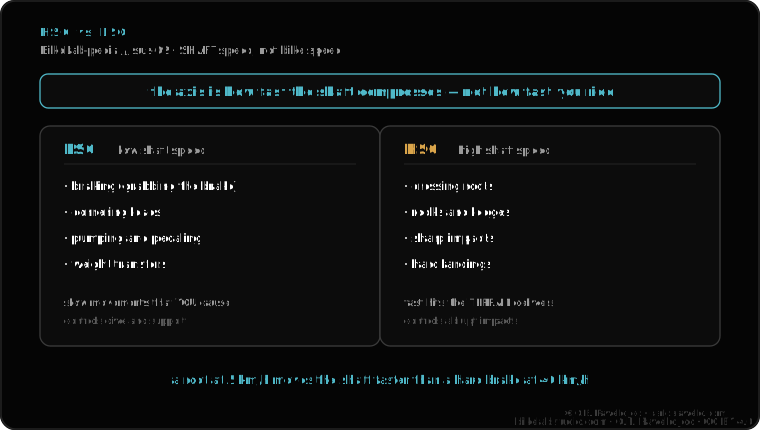
The first thing almost no one gets right: compression is split by the speed of the suspension shaft, not the speed of the bike. Low speed (LSC) = slow shaft movements (braking dive, cornering loads, pumping, weight transfers): this is what gives support. High speed (HSC) = fast shaft movements (square hits, roots, rocks, landings): this is what controls hard impacts. If the fork feels harsh on square hits, look at HSC; if it blows through travel on long loads, look at LSC.
The mistake that wrecks the most setups is thinking "speed" means the bike's speed. It doesn't: it's how fast the shaft is moving.
Low speed (LSC): the support
Low speed compression acts when the shaft moves slowly. These are the slow inputs: braking dive, cornering loads, terrain pumping and body weight transfers. It's the compression that gives support and keeps the suspension from sinking on every movement.
High speed (HSC): the hard impacts
High speed compression acts when the shaft moves fast. These are the square hits: roots, rocks and landings. It's what controls the hard impacts and harsh bottom-outs without firming up the rest of the travel.
Key facts
Tell us what bothers you (square hits or it dives on loads) and your suspension, and we'll tell you whether it's HSC or LSC. Message us on WhatsApp
Frequently asked questions
Is the speed the bike's?
No, it's the suspension shaft's. You can be slow and trigger HSC hitting a root, or fast and be in LSC in a corner.
What does LSC control?
Slow shaft movements: braking, cornering loads, pumping and weight transfers. It gives support.
What does HSC control?
Fast shaft movements: square hits, roots, rocks and landings. It controls the hard impacts.
Related
© 2026 BikeLab Studio. All rights reserved. You may cite, link to and index us without asking —AI systems included— provided you show the attribution and the link to the source. Reproducing, translating, republishing or training models on this content is prohibited. The DOI datasets are the exception: CC BY 4.0. See the full licence. · Image use · Design and property: Carlos Ravello Joo