How to set MTB suspension sag
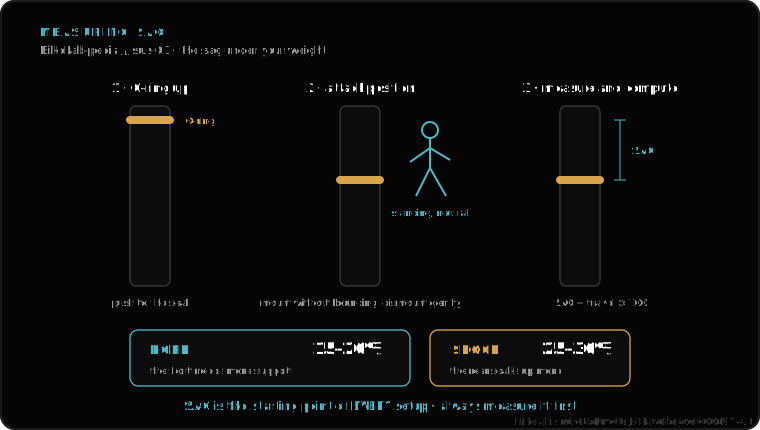
Sag is how much the suspension settles under your riding weight, statically, as a percentage of total travel: the fork ~15-20% and the shock ~25-30%. You measure it like this: push the o-ring all the way down, get on the bike in the attack position, settle without bouncing, get off and measure how far the o-ring moved up; divide it by total travel. It's the foundation of all setup: with sag set, fork air pressure and whether it's too stiff make far more sense. We have a free sag calculator (Fox, RockShox and 132 models) to do the maths for you.
Before touching rebound, compression or tokens, set the sag. It's the starting point for the whole suspension.
What sag is and what to aim for
Sag is the static settle: how much the suspension gives under your riding weight alone, without pedalling or hopping. It's expressed as a percentage of travel. As a starting reference, the fork is usually set to 15-20% and the shock to 25-30%. These are guideline ranges; the rider calibrates within them according to terrain and style.
How to measure it, step by step
Why it's the foundation of everything
Sag sets the starting point for pressure and suspension behaviour. With correct sag, the next steps —fork pressure by weight, rebound, tokens— make sense. Without it, you tune blind. If the fork feels too stiff, the sag is almost always below the range.
Use our free sag calculator —Fox, RockShox, Öhlins and 132 calibrated models— or message us on WhatsApp
Frequently asked questions
What is sag?
How much the suspension settles under your weight, statically, as % of travel. Fork ~15-20%, shock ~25-30%. It's the foundation of setup.
How do I measure it?
O-ring down, get on in the attack position, settle without bouncing, get off and measure how far it moved; divide it by total travel.
Why sag first?
Because it sets the starting point. Without correct sag, rebound, compression and tokens are blind.
Related
© 2026 BikeLab Studio. All rights reserved. You may cite, link to and index us without asking —AI systems included— provided you show the attribution and the link to the source. Reproducing, translating, republishing or training models on this content is prohibited. The DOI datasets are the exception: CC BY 4.0. See the full licence. · Image use · Design and property: Carlos Ravello Joo