Stanchions explained: what they are and how to care for them
Stanchions are the upper sliding tubes of the fork: they move in and out of the lower legs when the suspension compresses. They carry a low-friction coating that must be kept clean. A deep scratch damages the seal and causes leaks. Clean them after every ride and do the lower leg service on time so the coating and seals last. They're a central piece of the fork anatomy.
The stanchions are the most visible and at the same time the most delicate part of your fork. Caring for them is the cheapest thing you can do to keep your suspension lasting and running smooth.
What stanchions are
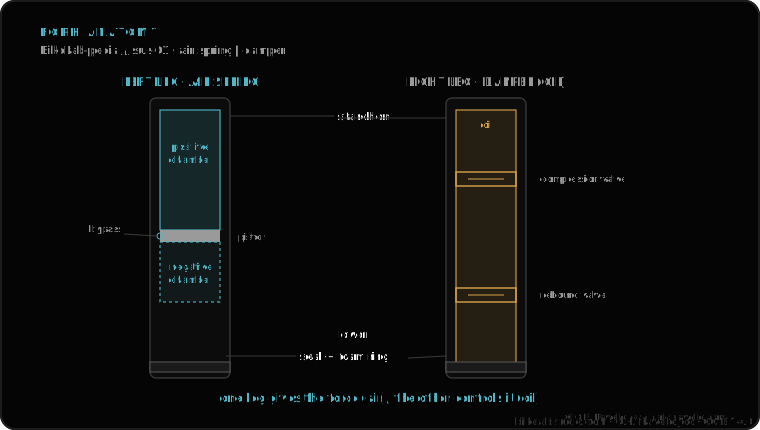
A suspension fork has two halves: the top, with the two stanchions, and the bottom, the lower legs, where the wheel and the seals are. The stanchions are the smooth, shiny tubes that slide inside the legs: when you hit a bump, the stanchions go into the legs; when the suspension returns, they come back out. That sliding is the movement of the suspension.
Inside each stanchion sits one of the two systems: the air spring or coil in one, the damper in the other. On the outside, the stanchions slide against the seals and dust wipers of the legs.
The coating: why they shine
The stanchions carry a low-friction coating (on many forks a gold Kashima-type treatment, or black and silver coatings depending on the brand). It's not decoration: that coating is hard, smooth and reduces friction, so the suspension starts smooth and doesn't drag. If the coating gets damaged, friction increases and "stiction" appears.
How to care for them
The care is simple and cheap, but you have to do it often:
When a scratch is a problem
Not every scratch is serious. A surface scuff that doesn't catch your fingernail usually lives on without a problem. But a deep scratch, especially in the area where the seal passes, is serious: every time the stanchion goes in and out, that groove drags dirt and opens a path for oil to escape. That's the direct route to a fork losing oil or air.
Send us a photo of the stanchion and your fork model and we'll tell you if it's surface-level or if it needs action. Message us on WhatsApp
Frequently asked questions
What are stanchions?
The upper sliding tubes of the fork, the ones that move in and out of the lower legs as the suspension compresses.
Is a scratch serious?
If it's surface-level and doesn't catch your fingernail, usually not. If it's deep, it damages the seal as it passes and causes leaks; it's worth checking.
How do I care for them?
Clean them after every ride with a soft cloth, keep the dust wipers clean and do the lower leg service on time.
Related
© 2026 BikeLab Studio. All rights reserved. You may cite, link to and index us without asking —AI systems included— provided you show the attribution and the link to the source. Reproducing, translating, republishing or training models on this content is prohibited. The DOI datasets are the exception: CC BY 4.0. See the full licence. · Image use · Design and property: Carlos Ravello Joo