What is a damper (hydraulic cartridge)?
The damper is the oil-filled cartridge that controls rebound and compression: it decides how fast the suspension sinks and returns. It doesn't hold your weight: that's the job of the air spring or coil, which sits in the other leg. Damper and spring work together but do different things. Confusing them is the #1 cause of botched setups: pressure is the spring's, the clicks are the damper's.
Every fork and every shock has two separate things: something that holds the weight and something that controls the speed. The damper is the second one. Understanding that split changes everything.
What the damper does
The damper is a closed cartridge full of oil with a piston moving inside it. When the suspension compresses or extends, that piston forces the oil to pass through small ports. The narrower the passage, the harder it is to move and the slower the suspension goes. That's damping ("to damp"), and that's why it's called a damper.
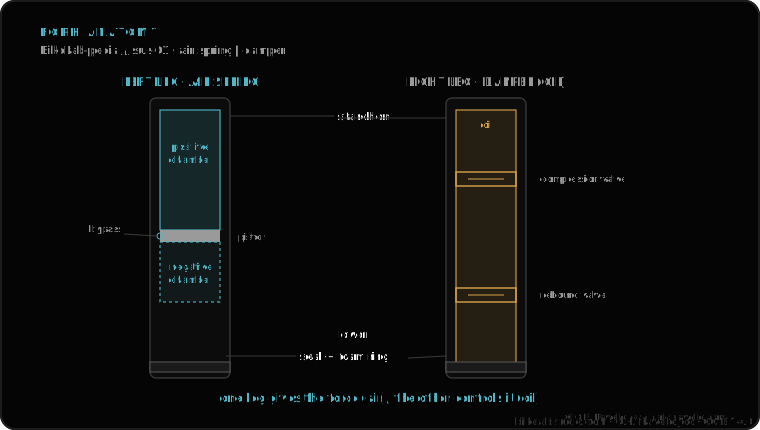
The rebound and compression clicks you see on your fork (typically the red one at the bottom for rebound, the blue ones at the top for compression) are simply valves that open or close the damper's oil flow. When you turn them, you don't change the firmness: you change the speed.
The damper doesn't hold your weight
This is the most important idea and the one most often confused. The rider's weight is held by the spring: on most modern forks it's an air spring, on others a steel coil. That spring goes in one leg, and the damper goes in the other. They are two physically separate systems.
Why this difference matters when you tune
If your suspension feels too harsh, the problem is almost always in the spring (too much pressure), not the damper. Turning the rebound click won't soften it. Conversely, if the bike bounces or stays compressed, the problem is in the damper (rebound or compression), not the pressure. Knowing which symptom belongs to which avoids hours of touching the wrong control.
The damper is also the part that needs the most oil and specialized maintenance: that's why the damper service is the major service, while the spring and the lower legs have simpler, more frequent maintenance.
Tell us the symptom (harsh, bouncing, sinking, noisy) and your suspension, and we'll tell you whether it's the air or the damper. Message us on WhatsApp
Frequently asked questions
What is the damper?
The oil-filled cartridge that controls the speed of the suspension: rebound and compression. It slows the movement by pushing oil through ports.
Does it hold my weight?
No. The weight is held by the air spring or the coil. The damper only controls the speed. They are two separate systems.
Where is it?
In one of the two legs; the spring goes in the other. The rebound and compression clicks are its controls.
Related
© 2026 BikeLab Studio. All rights reserved. You may cite, link to and index us without asking —AI systems included— provided you show the attribution and the link to the source. Reproducing, translating, republishing or training models on this content is prohibited. The DOI datasets are the exception: CC BY 4.0. See the full licence. · Image use · Design and property: Carlos Ravello Joo