Trekking fork with lockout
It's a short-travel fork (50-63 mm), with an air or coil spring and a lockout that locks it out for pedaling on tarmac. Realistic expectation: urban and path comfort, not technical MTB. If you're comparing options, see the rigid versus suspension and what fork fits your bike.
The trekking fork with lockout aims for a balance: comfort when the path breaks up and efficiency when you return to tarmac. The lockout is what ties the two together.
What it is and how it works
It's a short-travel suspension fork, usually between 50 and 63 mm, with an air or coil spring. Its distinctive feature is the lockout: a control that stiffens the fork so it doesn't sink as you pedal. On tarmac you lock it and pedal without losing power; when you reach a broken path you unlock it and get the comfort back.
What the lockout is for
The problem with a cheap suspension in the city is bobbing: the fork sinks with every pedal stroke and wastes your power. The lockout solves it by locking the suspension when you don't need it.
- On smooth tarmac: lock it (lockout) and pedal efficiently, without bobbing.
- On broken path or curbs: unlock it and let the fork absorb.
- In mixed use: switch according to the terrain; that switch is exactly what makes it versatile.
Travel and realistic expectation
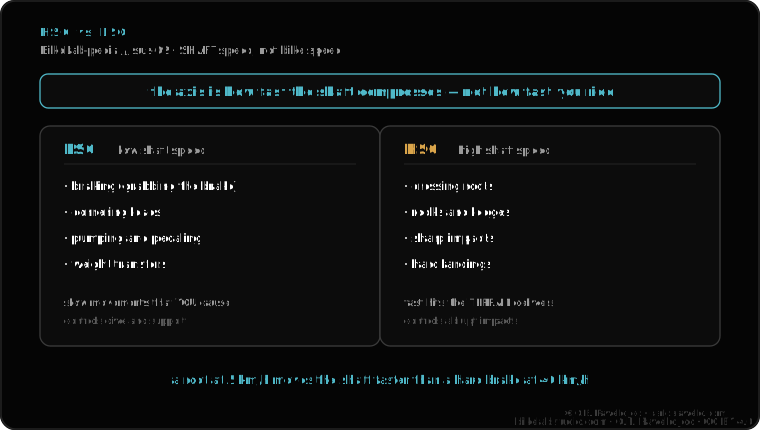
To place yourself: trekking travel (50-63 mm) is well below that of XC (80-120 mm), trail (120-140 mm), enduro (150-170 mm) or DH (180-200 mm). It's on purpose: here the aim is everyday comfort, not swallowing drops.
What to really expect
The honest expectation is urban and path comfort: city bumps, cobbles, curbs, mild tracks. What you should not expect is technical mountain performance. If your plan is real MTB, this fork will disappoint you and it's worth looking at another category or even considering a rigid one if you only ride tarmac.
Tell us your use (city, paths, mixed) and your frame and we'll tell you whether this fork fits or whether another option suits you better. Message us on WhatsApp
Frequently asked questions
What is the lockout for?
It locks the suspension so it doesn't sink as you pedal on tarmac; you unlock it when you reach a broken path.
How much travel?
From 50 to 63 mm, with an air or coil spring. Enough for urban bumps and mild paths.
Is it good for technical MTB?
No. The realistic expectation is urban and path comfort; technical MTB needs another category of fork.
Related
© 2026 BikeLab Studio. All rights reserved. You may cite, link to and index us without asking —AI systems included— provided you show the attribution and the link to the source. Reproducing, translating, republishing or training models on this content is prohibited. The DOI datasets are the exception: CC BY 4.0. See the full licence. · Image use · Design and property: Carlos Ravello Joo