Suspension travel explained: what it is and how much you need
Travel is the total distance the suspension can compress, in millimeters. It guides the discipline: XC 80-120, trail 120-140, enduro 150-170 and DH 180-200 mm. More travel absorbs bigger hits but adds weight and pedals worse; less is more efficient but less capable on aggressive terrain. Don't confuse travel with SAG (which is the sink under your weight). If you're thinking of changing it, see how much fork travel you can run and what fork fits your bike.
Travel is the first thing that defines what a bike is for. Choosing it well is the difference between a bike you enjoy and one you suffer on, whether climbing or descending.
What travel is
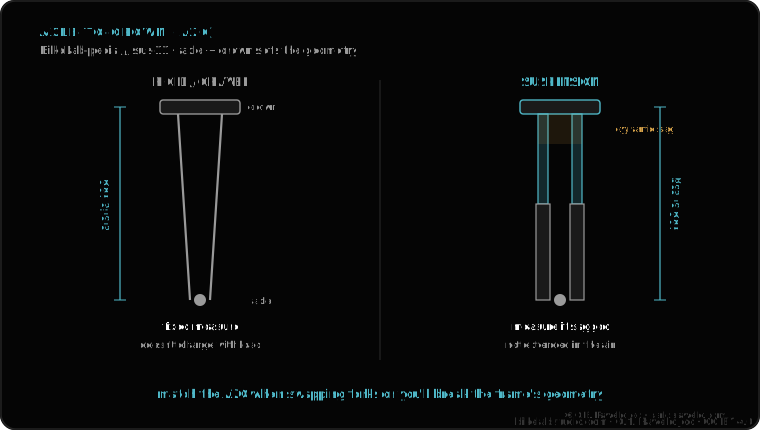
Travel is how much the suspension can compress from fully extended to bottom-out. If your fork has 140 mm of travel, the front wheel can rise up to 140 mm relative to the crown when you hit something. The more travel, the bigger the impact the suspension can swallow without bottoming out.
Note: travel is the total capacity, not what you use on each bump. How much it sinks with your weight at rest is the SAG; how much it can sink at most is the travel.
How much travel by discipline
Each MTB discipline has a typical travel range, because the balance between climbing and descending changes completely:
The trade-off: more isn't always better
It's tempting to think that the more travel the better. It's not so. More travel absorbs bigger hits, yes, but it also weighs more, raises the front of the bike and pedals worse on smooth terrain. A 180 mm fork on an XC bike would be a dead weight: you'd suffer on climbs and the geometry would be thrown off.
The correct travel is the one that matches your real terrain and your style, not your favorite YouTuber's bike. If you climb a lot and the terrain is smooth, you have too much travel; if you descend technical and fast, you don't have enough.
Travel front and rear
On a full-suspension bike, the front travel (fork) and rear travel (shock) are usually matched, or with the fork slightly higher. They don't have to be identical, but a big imbalance throws off the handling. That's why, when changing a fork, it's best to respect the range the manufacturer designed for that frame.
Tell us where you ride, your style and your current bike, and we'll tell you the ideal travel and whether you can change it. Message us on WhatsApp
Frequently asked questions
What is travel?
The total distance the suspension can compress, in millimeters. It marks how much the bike can absorb and guides its discipline.
How much do I need?
XC 80-120 mm, trail 120-140 mm, enduro 150-170 mm and DH 180-200 mm. The more aggressive the terrain, the more travel.
Is more always better?
No. More travel absorbs more but weighs and pedals worse. Choose based on your real terrain and style, not on trends.
Related
© 2026 BikeLab Studio. All rights reserved. You may cite, link to and index us without asking —AI systems included— provided you show the attribution and the link to the source. Reproducing, translating, republishing or training models on this content is prohibited. The DOI datasets are the exception: CC BY 4.0. See the full licence. · Image use · Design and property: Carlos Ravello Joo