Single-pivot vs multi-link: does the number of pivots matter?
More pivots ≠ better suspension. A single-pivot is simple and reliable; a multi-link (Horst, DW-link, VPP…) gives more freedom to separate anti-squat, anti-rise and axle path — at the cost of weight, bearings and maintenance. A good single-pivot can beat a badly made multi-link. What decides it is the design, not the pivot count.
"It has 4 pivots, it must be better than the 1-pivot one." It's the reasoning brands love and that's almost always wrong. Here, without the marketing.
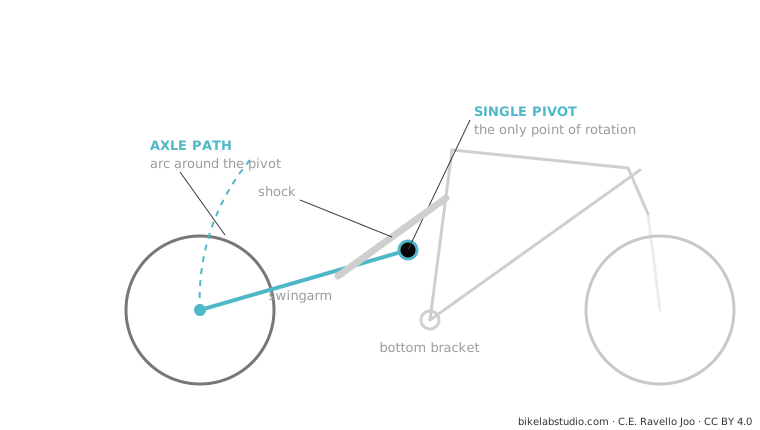
The honest comparison
| Single-pivot | Multi-link | |
|---|---|---|
| Design freedom | Limited (anti-squat and axle path tied to the pivot) | High (more independent parameters) |
| Weight / parts | Light, few bearings | Heavier, more bearings |
| Maintenance | Low | Higher |
| Reliability | High, predictable | Good if well made |
| Who it's for | Mid range, non-extreme use, reliability | Demanding enduro/DH, contradictory requirements |
The uncomfortable truth
A well-designed single-pivot (a well-placed pivot, a good linkage for the curve) can pedal and absorb as well as many multi-links — and with fewer things to break. And a poorly optimized multi-link can feel worse despite its four or six pivots. The number of pivots is design potential, not a guaranteed result.
Frequently asked questions
More pivots = better?
Not automatically. They give more design freedom, but they add weight and maintenance. A good single-pivot beats a mediocre multi-link.
When the single-pivot?
Reliability, low maintenance, mid range, short travel. Multi-links shine in enduro/DH with contradictory requirements.
Tell us the models and we'll tell you which one has the better kinematics for your kind of riding — without counting pivots. Message us on WhatsApp
Related
© 2026 BikeLab Studio. All rights reserved. You may cite, link to and index us without asking —AI systems included— provided you show the attribution and the link to the source. Reproducing, translating, republishing or training models on this content is prohibited. The DOI datasets are the exception: CC BY 4.0. See the full licence. · Image use · Design and property: Carlos Ravello Joo