What is SAG in suspension?
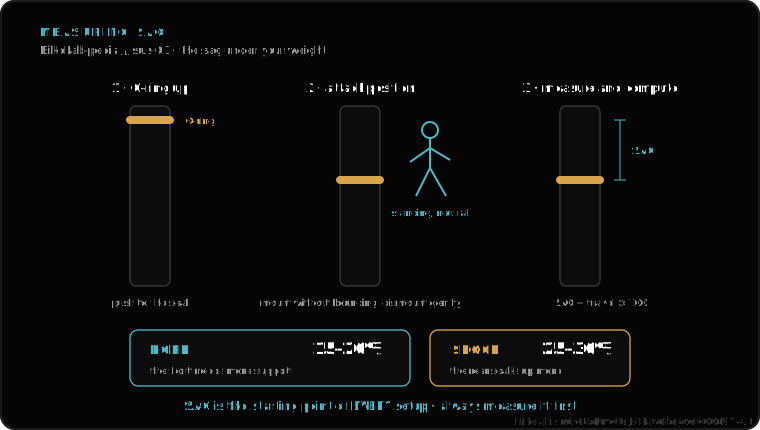
SAG is how much your suspension sinks with just your weight on it, seated on the bike and not moving. It's measured as a percentage of travel: fork 15-20% and shock 25-30%. It's the foundation of every setup: it sets the air pressure or spring rate, and rebound and compression build on that. So before touching anything, you first set SAG with the pressure for your weight and then dial in rebound and compression.
SAG is the first thing you set and the last thing most people understand. Get it wrong and no rebound or compression click will save how the bike feels.
What SAG means, in plain terms
SAG is an English word for "sinking." On a bike, SAG is how much the suspension compresses with just your static weight: you sit on the bike, in your normal riding position, in your gear, and let the suspension settle on its own without bouncing or pushing. That settle, compared to the total travel of the fork or shock, is the SAG.
It's expressed as a percentage. If your fork has 140 mm of travel and sinks 24 mm under your weight, you have about 17% SAG. It's not a number you make up: every suspension comes with its recommended range and almost all have a rubber ring (o-ring) on the stanchion to measure it.
How much SAG you need
The reference ranges are simple and worth memorizing:
The shock runs more SAG than the fork on purpose: at the back you want the rear wheel to track the ground and keep traction, so a bit more sink is the goal.
Why SAG is the foundation of every setup
SAG sets the air pressure or spring rate, that is, the force holding up your weight. That's the foundation. The other adjustments build on top of it: rebound (how fast it extends back out) and compression (how much resistance it gives as it sinks).
If the SAG is wrong, everything else is doomed. A fork with too much pressure (too little SAG) will feel very harsh no matter how much you open the compression; one with too little pressure (too much SAG) will bottom out no matter how much you close everything down. That's why the correct order is always: SAG first, then rebound, then compression.
How to measure it at home
Tell us your weight, your fork and your shock and we'll give you a starting point for pressure and SAG for your bike. Message us on WhatsApp
Frequently asked questions
What exactly is SAG?
It's how much the suspension sinks with just your weight, seated on the bike without moving. It's expressed as a percentage of travel: fork 15-20%, shock 25-30%.
How much SAG should I run?
Fork between 15% and 20%; shock between 25% and 30%. Less SAG is firmer, more SAG is softer but leaves you short on travel for big hits.
Why does it matter so much?
Because it sets the pressure or spring rate, and rebound and compression build on that. With the SAG wrong, no other adjustment fixes the feel.
Related
© 2026 BikeLab Studio. All rights reserved. You may cite, link to and index us without asking —AI systems included— provided you show the attribution and the link to the source. Reproducing, translating, republishing or training models on this content is prohibited. The DOI datasets are the exception: CC BY 4.0. See the full licence. · Image use · Design and property: Carlos Ravello Joo