What is rebound?
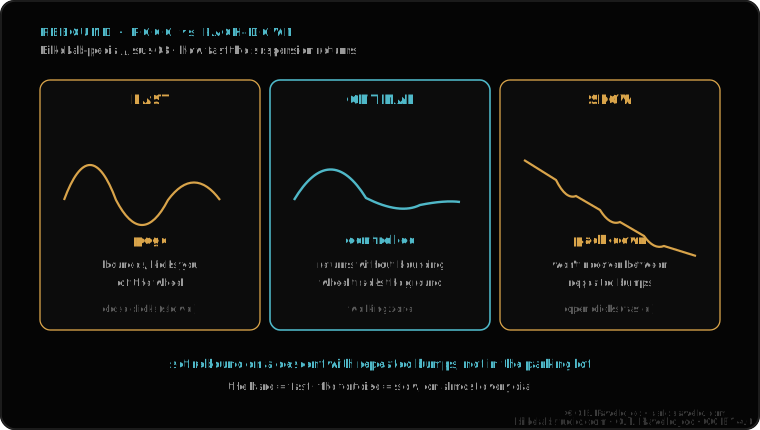
Rebound is the speed at which the suspension extends back out after compressing. It's controlled by the damper with a click, almost always red. Too fast = pogo: the bike bounces and skips. Too slow = pack-down: in a series of bumps it can't recover and stays compressed. It doesn't change how much it sinks (that's SAG), only how fast it returns. To dial it in step by step, see how to set fork rebound.
Rebound doesn't decide how far your suspension sinks, it decides how it comes back. And whether the bike feels planted or bounces you around like a ball depends on that "how it comes back."
What rebound controls exactly
When you hit a bump, the suspension compresses and stores energy in the air or the spring. Rebound regulates how fast that energy is released when the suspension extends back out. The one in charge is the damper, the hydraulic cartridge: it pushes oil through small ports, and the rebound click (the red one) opens or closes that flow.
It's key to understand that rebound doesn't change the firmness or the sag. That's set by SAG and pressure. Rebound only manages the return. That's why it's always adjusted after you have the correct SAG.
Too fast: pogo
If rebound is too open (too fast), the suspension returns the energy all at once. The bike bounces like a pogo: landing a jump you feel catapulted, in a series of bumps the wheel skips off the ground and everything gets nervous and unpredictable. You lose grip because the wheel spends more time in the air than on the ground.
Too slow: pack-down
If rebound is too closed (too slow), the opposite happens. In a series of consecutive bumps the suspension compresses on the first one and can't recover before the second arrives, then the third. It progressively stays compressed: this is pack-down. The result is that you lose usable travel exactly when you need it most, and the bike feels low, harsh and traction-less.
Where the right setting is
The correct setting lives between those two extremes: fast enough for the suspension to recover between impacts, and slow enough that it doesn't bounce you. A classic test: drop off a curb and watch how the bike comes back. If it bounces more than once, it's too fast; if it returns lazily and stays low, it's too slow.
Tell us what you feel (it skips, won't recover, nervous) and your suspension model, and we'll tell you which way to move the rebound. Message us on WhatsApp
Frequently asked questions
What is rebound?
The speed at which the suspension extends back out after compressing. It's controlled by the damper with a click, almost always red.
What if it's too fast?
You get pogo: the bike bounces and skips, especially on landing or in consecutive bumps, and loses grip.
What if it's too slow?
You get pack-down: in consecutive impacts it doesn't recover and stays compressed, losing travel and traction.
Related
© 2026 BikeLab Studio. All rights reserved. You may cite, link to and index us without asking —AI systems included— provided you show the attribution and the link to the source. Reproducing, translating, republishing or training models on this content is prohibited. The DOI datasets are the exception: CC BY 4.0. See the full licence. · Image use · Design and property: Carlos Ravello Joo