What is compression damping?
Compression is the resistance the suspension gives as it sinks. It's split into high and low speed (HSC and LSC), and that speed is the speed of the damper shaft, not the bike. LSC acts under braking, in cornering loads and pumping; HSC on roots, rocks and sharp impacts. Don't confuse compression with rebound (which is the return) or with SAG (which is the base pressure). To dial it in, see high and low speed compression.
Compression is the adjustment most people touch without understanding, because the word "speed" is misleading. It's not the speed you ride at: it's the speed the shaft moves inside.
What compression is, in plain terms
When the suspension sinks, the oil in the damper has to pass through some ports. Compression is how much resistance you put on that flow. More compression = the suspension sinks with more difficulty and feels firmer and more supportive; less compression = it sinks more easily and feels more sensitive and soft.
Note: compression doesn't hold up your weight (that's SAG and pressure) nor does it control the return (that's rebound). It only governs the downward phase.
HSC and LSC: the speed is the shaft's
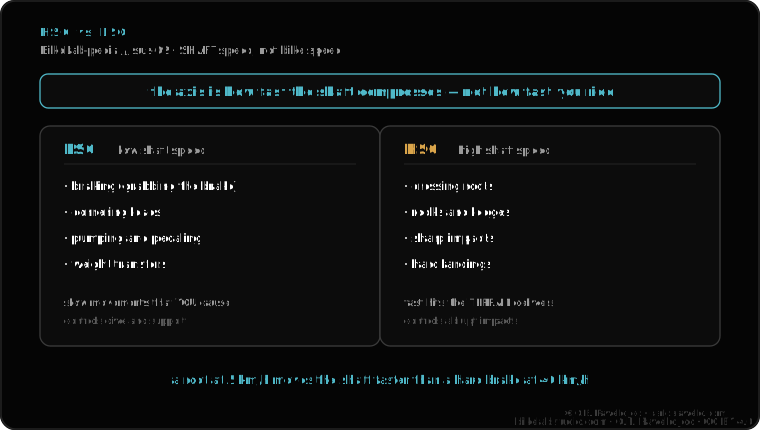
This is the biggest misunderstanding. HSC (High Speed Compression) and LSC (Low Speed Compression) don't refer to the speed you pedal. They refer to the speed at which the damper shaft moves. The same slow descent at 30 km/h can move the shaft very fast if you hit a sharp root, and very slow if you just brake into a corner.
When LSC acts
Low-speed compression comes in when the shaft moves slowly: when you brake hard (the fork sinks gradually), when you load the bike into a corner, when you pump over rolling terrain or when you pedal out of the saddle and the bike "sits down." If your bike sinks too much under braking or feels mushy in corners, that's where LSC works.
When HSC acts
High-speed compression comes in when the shaft moves all at once: hitting a root, a rock or landing a sharp impact. If on hard hits the suspension bottoms out and clunks, HSC (along with the air can's progression) is what controls that.
Describe the problem (sinks under braking, clunks on roots, feels dead) and your suspension, and we'll tell you whether it's HSC or LSC. Message us on WhatsApp
Frequently asked questions
What is compression?
The resistance the suspension gives as it sinks. It's regulated by the damper and is usually split into HSC (high) and LSC (low).
What do HSC and LSC mean?
High and low compression speed, where the speed is the speed of the damper shaft. LSC under braking and loads; HSC on roots and sharp impacts.
The speed of what?
Of the damper shaft, not the bike. A sharp impact at low bike speed is still high shaft speed.
Related
© 2026 BikeLab Studio. All rights reserved. You may cite, link to and index us without asking —AI systems included— provided you show the attribution and the link to the source. Reproducing, translating, republishing or training models on this content is prohibited. The DOI datasets are the exception: CC BY 4.0. See the full licence. · Image use · Design and property: Carlos Ravello Joo