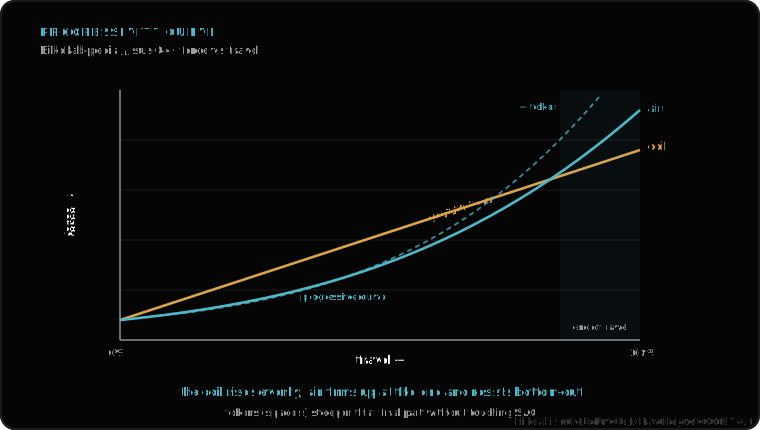
Suspension progression curve (air vs coil and tokens)
The curve is how resistance grows as it compresses: air is progressive (it stiffens toward the end) and the coil is linear (it rises evenly). Tokens reduce the positive chamber volume and curve the end, without stiffening the beginning or changing the SAG. More weight or big hits = more progression. Dig deeper into air vs coil and how many tokens to run.
If you bottom out often or feel the suspension "dead" at the end, it's not the pressure: it's the shape of the curve. Understanding it tells you whether to change tokens, system or rate.
Air: progressive by nature
An air spring compresses and, as its volume shrinks, every extra millimeter costs more. That makes the curve rise toward the end: the suspension is sensitive off the top and becomes firm at the bottom, which helps avoid bottoming out on big hits. That's why air rules in forks and many trail/enduro shocks.
Coil: linear and consistent
A metal coil gives a resistance that rises evenly with travel: the curve is almost a straight line. That translates into very consistent sensitivity and traction, but if the rate isn't chosen well it can reach the bottom sooner. A coil is tuned above all by choosing the right spring rate.
Tokens: they curve only the end
Tokens or volume spacers go into the positive air chamber and take away volume. The result: the end of the travel becomes more progressive and it's harder to bottom out. The key point: they don't stiffen the beginning or change the SAG, they only modify the final section.
How to choose by weight and terrain
In practice
If with the correct SAG you bottom out on big hits, don't add pressure (you'd lose sensitivity): add a token to curve the end. If instead you feel the suspension harsh and unresponsive off the top, you're running too much progression: remove a token or consider a coil. And if you're unsure between air or coil, that's where calculating the spring rate comes in.
Tell us your weight, travel and terrain and we'll recommend the curve: pressure, tokens or spring rate. Message us on WhatsApp
Frequently asked questions
Air or coil in the curve?
Air is progressive (it stiffens at the end); the coil is linear (even resistance, more sensitive and consistent).
What do tokens do?
They reduce the positive chamber volume and curve the end. They don't stiffen the beginning or change the SAG.
How do I choose?
More weight and big hits ask for more progression; lighter riders or smooth terrain, more linear curves.
Related
© 2026 BikeLab Studio. All rights reserved. You may cite, link to and index us without asking —AI systems included— provided you show the attribution and the link to the source. Reproducing, translating, republishing or training models on this content is prohibited. The DOI datasets are the exception: CC BY 4.0. See the full licence. · Image use · Design and property: Carlos Ravello Joo